Envy These Women Please

0
March 09, 2007
Differentiating from the usual Most Powerful Women list, Forbes did a little niching to come up with a slideshow of women billionaires they envy most :

"Imagine for a moment what it would be like to be a billionaire. No more picking up after the kids, doing dishes, worrying about how much a dress costs or pinching pennies to save for an amazing vacation. For the women on Forbes' new list of the world's billionaires, that dream is a reality. But it's not just their 10-figure fortunes that make us envious. Some of these women are famous; some wield enormous power; some have fascinating careers. Some have all three."

Is it just me, or inherited wealth is boring right from the very beginning? The emergence of the spoon people, or so they say -- "Spoon feeding in the long run teaches us nothing but the shape of the spoon" Edward Morgan Forster. A week ago I participated in a discussion about power, most importantly one trying to define power and we ended up with several states of power - positional power, the C-level executives, expertise power, or the revenge of the underestimated walking case studies, and networking power. It's all a cyclical process like pretty much anything in life. Continue reading →

U.K's Latest Military Satellite System

0
March 09, 2007
The U.K military is about to upgrade their Skynet 4 satellite system to Skynet 5 :

"Four steerable antennas give it the ability to focus bandwidth on to particular locations where it is most needed - where British forces are engaged in operations. Its technologies have also been designed to resist any interference - attempts to disable or take control of the spacecraft - and any efforts to eavesdrop on sensitive communications. An advanced receive antenna allows the spacecraft to selectively listen to signals and filter out attempts to "jam" it."

Among the many features the new system introduces, two are worth mentioning - it's targeted bandwidth capability where it's needed and the sort of DENY:ALL upgraded receive antenna to avoid jamming. Now pray China won't take it down, or let the debris (conveniently) take care of the rest -- so vulnerable it makes you want to establish a space warfare code of conduct. Continue reading →

Armed Land Robots

0
March 09, 2007
After seeking to dominate the air, it's time defense contractors turn back to innovating on the ground, especially when we speak of armed and remotely controlled robots. Crucial for both, reconnaissance and guerilla warfare situations, movement flexibity as well as payload capacity is what adds more value to these robots. An Israeli based defense contractor Elbit Systems recently introduced The Viper :

"The Viper, which is about a foot long and weigh approximately five pounds, is powered by a special electrical engine and operated by remote control or according to a program implanted in its 'brain' in advance. It is capable of climbing stairs, getting past obstacles and at the same time checks what is going on around it by means of a system of sensors. Equipped with a special nine-millimeter caliber Uzi machine gun, on which a laser pointer has been installed. The Viper is carried to the battlefield by a soldier on his back in a special carrier. When it is necessary to infiltrate a building safely where, for example, armed terrorists are hiding, the soldier lowers it to the ground, turns it on and from that moment controls it from a distance."

I'm very interested in the possibility for a 360 degree view, it's noise generation level, the variety of terrains its supports, and most importantly - would it put itself back on its "feet" if it inevitably turns upside down. See, you wouldn't want your pricey attack toy acting like a cheap remotely controlled car toy, would you? Engadget has a photo of Viper.

Here's a recommended article on the history of armed aerial UAVs, as well as a recent story on beam energy weapons, the vomit beam in this case. Continue reading →

UK Telecoms Lack of Web Site Privacy

0
March 08, 2007
When the U.S and Canada are the benchmark it's logical to conclude the U.K gets poor ratings as web site privacy especially in the commercial sector is something the U.S and Canada tackled a long time ago. Taking the pragmatic perspective, does it really matter in times when government officials abuse commercially aggregated data, one they cannot legally obtain by themesleves, and so they ought to perform as paper-tigers to access it? Here's an interesting analysis :

"The U.K. industry, however, performed much worse in privacy. Telecom firms, especially in the U.K., ask for more personal data than companies in other industries. This data is often unconnected to the request being made by the customer.

U.K. sites are generally unclear about data sharing practices, with 23 per cent judged to be explicit compared to 69 per cent in the U.S. Clarity in this area has made steady gains in the U.S. in the past 12 months, but the U.K. has shown no significant change.

It is not only clarity that fails in the U.K., but also the actual practices in place. Eleven of the 13 sites routinely share personal data with other internal groups, business partners or third parties without explicit permission. This compared poorly with the U.S., where 40 per cent share in the same way. The best performing site with regards to privacy in the U.K. was O2."

Moreover, the U.K realizing its ongoing negative PR across the globe in respect to the CCTV surveillance myopia, they've released a report claiming Italy's COMINT is worse than their (walking) CCTV surveillance efforts. To publish a privacy policy or not to publish a privacy policy? That "used to be" the question. Continue reading →

Steganography Applications Hash Set

0
March 08, 2007
Did you know that there are over 600 applications capable of using steganography to hide data? Me neither, but here's a company that's innovating in the field of detecting such ongoing communication :

"Backbone Security’s Steganography Analysis and Research Center (SARC) is pleased to announce the release of version 3.0 of SAFDB. With the fingerprints, or hash values, of every file artifact associated with 625 steganography applications, SAFDB is the world’s largest commercially available hash set exclusive to digital steganography and other information hiding applications. The database is used by Federal, state and local law enforcement; intelligence community; and private sector computer forensic examiners to detect the presence or use of steganography and extract hidden information.

Version 3.0 contains hash values for each file artifact associated with the 625 steganography applications computed with the CRC-32, MD5, SHA-1, SHA-224, SHA-256, SHA-384, and SHA-512 algorithms.

A free extract of SAFDB with MD5 hashes only is available to qualifying law enforcement, government, and intelligence agency computer forensic examiners."

Chart courtesy of Huaiqing Wang and Shuozhong Wang. And here's a related post. Continue reading →

Distributed Computing with Malware

0
March 08, 2007
Distributed computing with malware infected PCs is nothing new as a concept, it's just the lack of botnet master's desire to contribute processing power for anything socially oriented. That's until late last month, when members of Berkeley's BOINC project noticed a project that was suspiciously becoming popular and found out that malware infected PCs had the BOINC client installed to participate in it :

"It recently came to the attention of boinc staff that a multi-project cruncher called Wate who occupied a very high position in the boinc and project stats had reached this exalted position by dishonest means. In early June 2006 he appears to to have released onto the internet a link purporting to provide Windows updates including now for Vista. Some 1500 members of the public worldwide downloaded these 'updates' which in fact consisted of a trojan application that downloaded boinc.exe and attached the person's computer to Wate's account, giving him the subsequent fraudulent credits. About 90% of the people affected appear to have uninstalled or disabled the unwanted boinc installation, but some compromised computers are still running and crashing climate models. Boinc and project staff have no means of contacting the owners of these computers."

If only would botnet masters take this note seriously, I'm sure we'll see certain networks controlling the top 10 positions at the BOINC project. A war on bandwidth or CPU power? Continue reading →

Documentary on ECHELON - The Spy System

0
March 07, 2007
Remember ECHELON? The über-secretive worldwide intelligence sharing network that various activists once tried to poison by generating fake suspicious traffic using predefined keywords? Well, the system is still operating, and with the lack of transparency in the participating country's use and abuse of the technology, all we need is an EU alternative competing with the original.

Watch this excellent half an hour long documentary and find out : "What exactly is Echelon? How can it invade privacy, yet protect liberty? How did this billion-dollar system miss the September 11th attacks? In a riveting hour, we uncover the mysterious, covert world of NSA's electronic espionage."

Continue reading →

USB Surveillance Sticks

0
March 07, 2007
Despite the ongoing awareness built among enterprises and end users on the risks posed by removable media, there are vendors offering various surveillance solutions over an USB stick. Some are handy, others contradictive. And while RFID tags are getting smaller than a crop of rice, here are three surveillance solutions to keep in mind right next to the notorious KeyGhost hardware keylogger.

SnoopStick
An example of malware on demand at $59.95 which comes with lots of features as well as automatic updates :

"The SnoopStick monitoring components are completely hidden, and there are no telltale signs that the computer is being monitored. You can
then unplug the SnoopStick and take it with you anywhere you go. No bigger than your thumb and less than 1/4" thick, you can carry it in your pocket, purse, or on your keychain. Any time you want to see what web sites your kids or employees are visiting, who they are chatting with, and what they are chatting about, simply plug in your SnoopStick to any Windows based computer with an Internet connection and a USB port. SnoopStick will automatically connect to the target computer."

TrackStick
Portable GPS surveillance with historical routes that look simply amazing when applied at Google Earth :

"The Track Stick will work anywhere on the planet Earth. Using the latest in GPS mapping technologies, your exact location can be shown on graphical maps and 3D satellite images. The Track Stick's micro computer contains special mathematical algorithms, that can calculate how long you have been indoors. While visiting family, friends or even shopping, the Track Stick can accurately time and map each and every place you have been."

GadgetTrack
An interoperable surveillance solution supposed to assist you in case your iPod or even PSP get stolen, all you have to do is infect your device and prey there's Internet connectivity at a later stage. Tracking your stolen devices is one thing, getting them back is completely another :

"What if your device could phone home? Well now it can. With our patent-pending GadgetTrak™ system, you simply register your device and install our agent files on your device. If your device is missing or stolen, you log into your account and flag the device as lost or stolen. The next time the device is accessed it will attempt to contact us and provide data regarding the system it is plugged into." Continue reading →

Death is Just an Upgrade

0
March 07, 2007
Started as a project to digitally mimic 100% a human's behaviour, the Virtual Soldier research program is getting more funding to accomplish its mission, and go beyond :

"In particular, the contract calls for the VSR team to further develop their "Predictive Dynamics" tools for use in calculating human motion in a military environment. Invented by VSR researchers, the field of Predictive Dynamics already has made a significant impact on the field of human motion simulation by making it possible -- for the first time ever -- to calculate the walking and running involved in human gait when given such variables as human body size, strength, weight, load-carrying abilities and clothing effects."

Next, Santos will find himself exposed to radiation, blown up on pieces, getting hit by a truck, or pretty much anything that you would never get the chance to -- legally -- expose a living human to, for testing purposes. Continue reading →

Botnet Communication Platforms

0
March 07, 2007
Botnets, or the automated exploitation and management of malware infected PCs is perhaps the most popular and efficient cyber threat the Internet faces these days. Whether you define it as the war on bandwidth or who's commanding the largest infected population, this simple distributed hosts management problem is continuing to evolve in order for the botnet masters to remain undetected for as long as possible. On the other hand, the growing Internet population combined with the lack of awareness of the "just got a PC for Christmas" users, and IPv4's well known susceptability to IP spoofing compared to IPv6, always make the concept an interesting one to follow.

Despite that at the beginning of 2006, I pointed out on how malware related documentation and howtos turned into open source code resulting in a flood of malware variants, thus lowering the entry barries for a novice malware copycats, a week ago I located a very throughout document on various botnet communication platforms and I'm sure its author wouldn't mind me reposting the fancy graphs and commenting on them.

IRC based Botnet Communications
Nothing ground breaking in this one besides the various advices on stripping the IRCd, creating own network of IRC servers compared to using public ones, and on the importance of distributed secrecy of the botnet participants' IPs, namely each bot would never know the exact number or location of all servers and bots.

HTTP Botnet Communications

The possiblities with PHP and MySQL in respect to flexibility of the statistics, layered encryption and tunneling, and most importantly, decentralizing the command even improving authentication with port knocking are countless. Besides, with all the buzz of botnets continuing to use IRC, it's a rather logical move for botnet masters to shift to other platforms, where communicating in between HTTP's noise improves their chance of remaining undetected. Rather ironic, the author warns of possible SQL injection vulnerabilities in the botnet's command panel.

ICQ Botnet Communications
Perhaps among the main reasons to repost these graphs was the ICQ communication platform which I'll leave up to you to figure out. As a major weakness is listed the reliance on icq.com, but as we've already seen cases of botnets obtaining their commands by visiting an IRC channel and processing its topic, in this case it's ICQ WhiteLists getting the attention.

Related comments on the programming "know-how" discussed will follow. Know your Enemy!
Continue reading →

Real Time Censored URL Check in China

0
March 02, 2007
While the original initiative for a real-time URL censorship check in China was originally realized as a project by Jonathan Zittrain and Benjamin Edelman couple of years ago, it's great to see someone continued what they've started and came up with the GreatFirewallofChina.org :

"Aim of this website is to be a watchdog and keep track of which and how many or how many times sites are censored. Help to keep the censorship transparent. Each blocked website will automatically be added to the great firewall on the homepage."

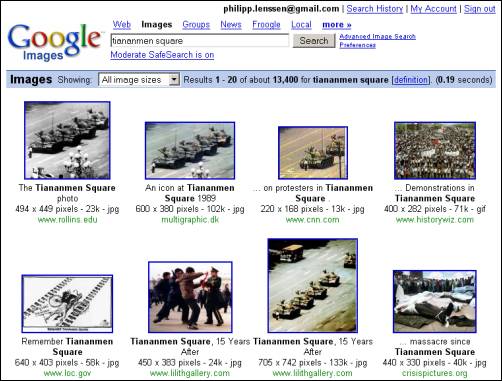
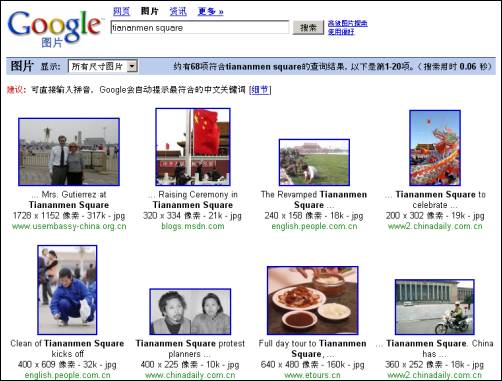
What you should keep in mind is that despite of the capability for URL checking, from a technical perspective the censorship in China is much more sophisticated. Realizing that URLs themselves can be obfuscated, proxies and many other alternatives such as TOR for instance used, dynamic page content scanning for subversive keywords and the same technique used for sms messages is what I have in mind. For instance, according to the GreatFirewallofChina, blogspot.com is not blocked in the country, which doesn't mean a Taiwan independence related blog's content wouldn't get filtered. Moreover, it's perhaps even more disturbing to see various search results from a Chinese user's perspective, than figuring out whether an URL is blocked or not only. Here are two great screenshots confirming the twisted reality, and a recent summary of situation in China.

It would be great to see how this project evolves and starts taking presenting the results by confirming whether or not an URL is blocked in all of the countries on the world's censorship map, or ever better, start feeding local search engines with possibly censored keywords, summarize the results and emphasize on the big picture. Continue reading →

AdSense Click Fraud Rates

0
March 01, 2007
Google's single most profitable revenue generation source AdSense has always been under fire for click fraud and most importanly the company's been under public scrutiny for better communicating their efforts on fighting the problem. Third party companies emerged and started filling the niche by coming up with click fraud analytics software so that Google's major customers, even the small to mid-size business could take advantage of an automated way to analyze click anomalies. But how prelevant is the problem really? Should the discussion always orbit around Google's efforts, to its customers' vigilance and education on detecting click fraud, or should it shift to improving the communication between all participants, namely Google, its customers and the click auditing companies?

According to the most recent click fraud rate from Google - click fraud is only 0.002% of all clicks. Danny Sullivan has an in-depth analysis of the topic, emphasizing on the importance of detected click fraud rates :

"Finally, we have a click fraud rate from Google itself: less than 0.02 percent of all clicks slip past its filters and are caught after advertisers request reviews. That low figure is sure to bring out the critics who will disagree. Below, more about how Google comes up with the figure plus some click fraud fighting initiatives it plans to implement later this year.Why release this figure now, when many have wanted it for literally years?

"We've been working to be more transparent and informative on the issues related to click fraud. Recently, this metric has been something advertisers have specifically asked for and we agree that is useful in describing the scope of the problem. Further, it is something we measure and use to monitor the performance of our click fraud detection systems," said Shuman Ghosemajumder, business product manager for trust & safety at Google."

During July, 2006 Google commissioned a third-part analysis of their efforts to fight click fraud you will definitely find informative, and here's another research taking the discussion beyond the typical botnets and human clickers perspective. There are also false click fraud positives to keep in mind as shown in this analysis.

Stats courtesy of Clickfraudindex who by the way started blogging recently. Continue reading →

Social Engineering the Old Media

0
February 28, 2007
While the Rules of the Thirds are partly in place, the floating fragnance and his depressed look provide some clues. The story is very interesting though as it has happened before. As Tim Nudd comments on Adfreak :

"In Switzerland, it doesn’t take much to be in a Gucci ad campaign. You photograph yourself naked, add a perfume bottle and the Gucci logo, send it to a weekly paper, and have them bill Gucci directly for the $50,000. They’ll fall for it every time."

How it could have been prevented? Coordinating the campaign with local Gucci representatives, ensuring payment is processed before the ad is featured, or let's just say look at his face to figure out he's anything but a professional model. Continue reading →

Storm Worm Switching Propagation Vectors

0
February 28, 2007
The storm started with mass mailings, then the malware switched to IM propagation, and now the infected PCs are further spreading through blog and forum posts :

"But the twist comes when these people later post blogs or bulletin board notices. The software will insert into each of their postings a link to a malicious Web site, said Alperovitch, who rates the threat as "high."We haven't seen the Web channel used before," he said. "In the past, we've seen malicious links distributed to people in a user's address book and made to look like it's an instant message coming from them."

The smart thing is that compared to situations where malware authors have to figure how to bypass the forum's CAPTCHA or mass spam and generate new blogs, in this case the (infected) end user is authenticating both himself and the malware. Here are some malware stats on social networking sites worth going through as well.

UPDATE: Symantec has a nice analysis with some screenshots of this variant. Continue reading →

Credit Card Data Cloning Tactic

0
February 27, 2007
First of all, she's too cute for someone to even have the slightest suspicion, and to be honest the posers paying their coffee with a credit card deserve it -- it leaves them without the opportunity to leave a change at least that's what they've thought.
Continue reading →

XSS Vulnerabilities in E-banking Sites

0
February 27, 2007
The other day I came across to this summary with direct examples of various XSS vulnerabilities at E-banking sites, and I wonder why the results still haven't gotten the necessary attention from the affected parties :

"First of all you should realize, that this is not the first time, that we are doing such a website. The last time we hit a vast number of sites, mostly german banks. We have shown, that those sites, that should be most secure are not! Many visitors saw the site and also the banks seemed quite upset, nevertheless they fixed the problems, that we pointed at. You can check out the archive at: [English version] and [German version]. This project has been done as a direct reaction to the poll done in austria not long ago and which was reported at [this article] from Heise. For the english readers of you, this article basically says, that 9 of 10 people using online banking in austria trust the security, that their banks offer."

The best phishing attack at least from a technical perspective is the one that's using a vulnerability in the targeted's brand site to further improve its truthfulness, and believe it or not, certain phishing attacks are actually loading images directly from the victim's sites instead of coming up with the phish creative on their own. Continue reading →

Fake Terror SMS Sent to 10,000 People

0
February 27, 2007
This is serious, and while it was a hoax, it could have had much more devastating results acting as a propagation vector for malware, a phishing attack as the social engineering potential here for anything offline or online is huge :

"About 10,000 commuters who subscribe to the train operator's timetable messaging service received the threatening text message on Friday night after hackers broke into the system. The message, sent after 9.30pm (AEDT), reads: ALLAHU AKBR FROM CONNEX! our inspectorS Love Killing people - if you see one coming, run. Want to bomb a train? they will gladly help. See you in hell!"

ALLAHU AKBR means "God is the Greatest". Now which God is the greatest I'll leave up to your religious beliefs, though the Muslim motives are spooky and the attack directly undermines the citizens' confidence in their government's ability to protect them -- what I anticipate next are articles on how terrorists take control over the trains. I'm very interested in who's having acccess to the company's feature, and most importantly to what extend are they outsourcing, or was it an insider that used someone else's terminal to send the message? Here's a related post on the interest of various governments into developing an SMS disaster alert and warning systems and the related security/impersonation problems to consider. Continue reading →

A Review of SiteAdvisor Pro

0
February 23, 2007
During 2006, the company popped out like a mushroom in front of my desktop as you can read in a previous post, and on its acquisition two months later. In the typical detailed and extensive CNET Reviews style, here's what they have to say about SiteAdvisor Plus :

"SiteAdvisor Plus includes the ability to report suspicious links within IM and e-mail and can automatically block access to flagged sites. However, SiteAdvisor Plus lacks additional configuration options and doesn't work with Firefox or Opera, or with branded browsers from AOL and other services. In addition, the paid version on Internet Explorer appears to conflict with the free version installed on Firefox. Overall, we experienced greater flexibility and fewer hassles when using the free Netcraft toolbar, and we also liked the proactive nature of Linkscanner Pro better."

The niche filling competition is also reviewed, namely LinkScanner Pro. Niche filling in respect to the real-time sandboxing of results, a concept I'm sure is on its way at SiteAdvisor, or else the community has a lot to contribute as always. SiteAdvisor are however truly embracing a Web 2.0 business model on all fronts, and it's perhaps my favorite case study on commercializing an academic idea during the last year. Continue reading →

Characteristics of Islamist Websites

0
February 23, 2007
Excellent and recent analysis of the most common characteristics of islamist websites published by the Middle East Media Research Institute :

"The media platform favored by the Islamist organizations is the Internet, which they prefer for several reasons: firstly, for the anonymity it allows - anyone can enter and post to a site without divulging personal information; secondly, due to the medium's availability and low cost - all that is required is a PC and an Internet connection; and thirdly, due to the ability to distribute material to a great number of people over a wide geographic area in a matter of seconds.

The organizations use the Internet mainly for propaganda and indoctrination, but also for operational military needs.

This paper will discuss the distinguishing characteristics of the websites of Islamist organizations and their supporters; the various online activities through which terrorist organizations assist the mujahideen on the ground, both militarily and, especially, with propaganda; and the Internet polemics that these organizations conduct vis-à-vis their enemies."

The majority of articles you've probably read are doing nothing more than scratching the surface of the topic. Fundraising, propaganda, communications within steganographic images and the use of plain simple encryption, or the thriller type of scenarious where entire food supply chains get remotely controlled or where your next dose of Prozac may be a little bit more dangerous than it actually is, of course because terrorists may have the capacity to do so. In the post 9/11 world terrorist experts started emerging from all over the globe, universities realizied the potential and opened up educational courses, even degrees, security companies started pitching their offers with cyberterrorism in mind, and last but not least the mainstream media doesn't seem to stop piggybacking on historical events while actually doing terrorists the biggest marketing favour of them all - the media echo effect. Someone blows him or herself up in the Western world, and everyone forgets about all those little things people die from if you are to go through you local statistical institute and see the death rates, but starts requesting more information on what is your government doing to prevent this from happening. But compared to the same situation in the Middle East - it's part of the daily life, nothing ground-breaking besides a bunch of low lifes radicalizing online, looking for masters of brainwashing mentors, and most importantly looking for a mighty excuse for their pathetic existence. A terrorist organization uploads a video of shooting a soldier or anything that will shock someone's who's still getting shocked by the The Texas Chainsaw Massacre -- boring try the Evil Dead series -- and people become so outraged and get this feeling of being helpness in the situation that fear compared to reality drives the entire model of terrorism.

Terrorism is successful as both, a government's doctrine for re-election, and as a term mainly because it's a very open topic term these days. In some countries glorifying terrorism is illegal, but if you let you government convince you that it's not terrorizing you to protect you from an event that from a statistical point of view doesn't happen that very often, I think I will lose you as a reader of this blog. The world is losing the war on terrorism because it's rational, and terrorists aren't rational. In the very same fashion that companies don't compete with companies but with networks, a network that's anything but irrational isn't going to be beated by a network that's too bureaucratic and still waging departamental wars.

Go through many of my previous posts on cyberterrorism, a relevant collection of cases, and through the research which as a matter of fact is full with practical examples of various sites. Continue reading →

The RootLauncher Kit

0
February 23, 2007
After providing more insights on the WebAttacker Toolkit and the Nuclear Grabber, in this post I'll discuss the RootLauncher, a release courtesy of the same group behind WebAttacker. Something else worth mentioning is that a large percentage of the sites I'm monitoring are starting to use authentication, and on a trust-basis login access, perhaps it's due to the enormous coverage recent "underground" releases, namely phishing kits etc. got in the mainstream media. Therefore I'm doing my best to get as much information -- and screenshots -- before it dissapears and will blog on these releases as soon as my schedule allows me to. For instance, several months ago you could easily see over 50 publicly available control panels for the WebAttacker toolkit, now there're only several available through Google. The same goes for RootLauncher.

The RootLauncher kit is advertised -- Rusian to English automatic translation -- as follows :

"Just, we can offer you 3-version - D o w n l o a d e r-designed RootLauncher for the hidden load arbitrary WIN32 Exe-faila from a remote resource, followed by the launch of the file on the local hard disk. Obhodit all protection is not determined by any AV-Do not see fairvollah - Flexible settings - Periodic updates and supplements may download up to five exe files. Our team is not at the same point and develops all bolshe-bolshe for you dear friends services available to them closer you will be able to on our official website. We are also looking for people interested in partnership with us."

And while it's supposed to be nothing more then an average downloader, these "average downloaders" are actually starting to standardize features in respect to statistics and compatibility with other toolkits and malicious software.

In a previous post at WebSense's blog, they came across a web panel showing that the "total number of unique launchers is 155" now count these as infected PCs, but as you can see in the image attached, the sample could be much larger. This one I obtained from the following URL : http://www.inthost7.com/cgi-bin/rleadmin.cgi which is of course down, but was listing 1013 launchers already, here's an analysis of this very same URL.

IP cloaking when browing such sites and forums is important in order for you to remain as anonymous as possible. If you're on a Russian site make sure you're a Russian domain, if you're on a Chinese site make sure you're a Chinese domain, and most importantly don't directly translate through Google or Altavista, but copy and paste what's interesting to you so that you wouldn't let someone wonder why would a Russian domain translates a Russian text to English. Imagine the situation where security vendors browse them through their securityvendor.com subdomains, the results will follow shortly -- everything dissapears.

In respect to the WebAttacker, the kit is still widely used but the people using and updating it are starting to prevent Google from crawling and caching the control panels, which makes it harder to keep track of the sites in an OSINT manner -- my modest honeyfarm keeps me informed on URLs of notice though. Here's one of the very few instances of a Web-Attacker Control Panel still available at Google. Here's an analysis of the source code of the Web-Attacker kit as well -- and I thought I'm going full disclosure. More details on various newly released packers, multi-exploit infection toolkits, and standardized statistics with all the screenshots I've managed to obtain will follow next week.

Taking into consideration the big picture -- like you should -- the release and automation of phishing/exploit kits and lowering the entry barriers for script kiddies to generate enough noise to keep the real puppet masters safe, or at lease secretly pull the strings. I'd rather we operate in the time when launching a phishing attack required much more resources than it requires today. Continue reading →