Wednesday, October 18, 2006

A Cost-Benefit Analysis of Cyber Terrorism

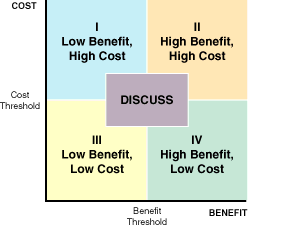
What would the ROI be for a terrorist organization wanting to take advantage of cyberterrorism, and how would they measure it?

Provocative perspective trying to emphasize on the minimal resources required to develop a cyberterrorism platform, with very interesting assessments of various financial issues and possible casualties. "A Cost-Benefit Analysis of Cyber Terrorism" tries to answer:

"Would cyberterrorism be a viable option for terrorists? This article addresses these questions assuming that a hypothetical terrorist group, interested in adding cyberterrorism to its arsenal, de-cides to engage in a cost-benefit analysis to assess the payoffs and investment re-quired by such a new endeavor. The conclusions are that cyberterrorism is not a very efficient substitute for more traditional tools like bombs. It is more effective for the terrorists to exploit information infrastructures to fight a “war of ideas,” spreading their beliefs and points of view."

While the publication is released two years ago, it has recently come to the global attention that Hezbollah aren't exactly the type of cave-hiding individuals, ones fully realizing the concept of outsourcing instead of re-inventing the wheel. While attacks on the critical infrastructure, namely frontal cyberterrorism attacks are still priority number one, and the possible scenarios already tested numerous times, this "cyberterrorism myopia" created many other dimensions of the concept.

What went beneath the radar and consequently evolved?
- online radicalization, propaganda, communication, recruitment, education, and fund-raising actually produce the "traditional terrorists"
- PSYOPS twisting the very foundations of the religion for the sake of a cause
- religious extremism started targeting more easily influenced/brainwashed youngsters while CCTVs were installed on the hot spots, and new IDs when homegrown terrorists make the news
- Hezbollah using U.S hosting companies since 1998
- OSINT backed PSYOPS improving the truthfulness of the statements

Keep on reading and data mining.

The Stereotyped Beauty Model

If women/girls didn't hate each other so much, they could rule the world. Nice ad counter-attacking the entire "chickness ad model". Feels like Unilever got so successful promoting it, so that now they have to reposition themselves as a socially oriented company, not masters of Photoshop whose virtual creations directly influence McDonald's business model.

Tuesday, October 17, 2006

Registered Sex Offenders on MySpace

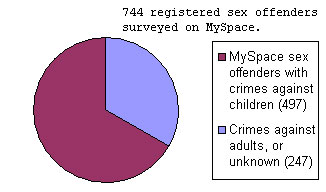
Should you be filtering online predators, prosecuting them, or monitoring their activities to analyze and model the behaviour of the rest of them? Seems like Kevin Poulsen's been data mining MySpace using the Department of Justice's National Sex Offender Register, and the results are a Caught by Code MySpace Predator :

"The automated script searched MySpace's 1 million-plus profiles for registered sex offenders -- and soon found one that was back on the prowl for seriously underage boys.Excluding a handful of obvious fakes, I confirmed 744 sex offenders with MySpace profiles, after an examination of about a third of the data. Of those, 497 are registered for sex crimes against children. In this group, six of them are listed as repeat offenders, though Lubrano's previous convictions were not in the registry, so this number may be low. At least 243 of the 497 have convictions in 2000 or later."

These findings indicate the offenders' confidence in MySpace's inability to take the simplest measure - match the publicly accessible data with its database - just in case. It's also worth mentioning that according to a recently released comScore analysis "more than half of MySpace visitors are now age 35 or older", and that according to their analysis, Facebook, and Xanga have much younger audiences, namely represent a top target for online predators.

The most important issues however, remain the moment when a kid losses the communication with its "folks", and the huge amount of information kids share on any social networking site, thus unconsciously creating more contact points for the online predator.

Internet Safety for Kids - a presentation for adults, is full with handy tips for educating and building awareness on the problem.

Monday, October 16, 2006

CIA's In-Q-Tel Investments Portfolio

In a previous post "Aha, a Backdoor!" I discussed the "exemption" of publicly traded companies from reporting to the SEC the usual way, and particularly their investments related to national security. The strategy is visionary enough to act a major incentive factor for companies to both, innovate, and supply the homeland security and defense markets.

However, publicly obtainable data can still reveal historical developments:

"A relatively unknown branch of the CIA is investing millions of taxpayer dollars in technology startups that, together, paint a map for the future of spying. Some of these technologies can pry into the personal lives of Americans not just for the government but for big businesses as well.

The CIA's venture capitalist arm, In-Q-Tel, has invested at least $185 million in startups since 1999, molding these companies' products into technologies the intelligence community can use.

More than 60 percent of In-Q-Tel’s current investments are in companies that specialize in automatically collecting, sifting through and understanding oceans of information, according to an analysis by the Medill School of Journalism. While In-Q-Tel has successfully helped push data analysis technology ahead, implementing it within the government for national security remains a challenge, and one of In-Q-Tel’s former CEOs, Gilman Louie, has concerns about whether privacy and civil liberties will be protected."

In a related Red Herring article, In-Q-Tel points out that :

We don’t just invest in equity of companies,” said Scott Yancey, the firm’s interim chief executive. “That’s kind of the hallmark of who we are in terms of being the strategic investor.”

Observers said the payments don’t fit with the typical venture model.

“To the extent that In-Q-Tel incentivizes its portfolio companies or employees otherwise, it sounds like from an outsider’s point of view that they’ve needed to create some artificial incentives that wouldn’t otherwise be necessary in a traditional venture model,” said Scott Joachim, a partner with the law firm Drinker, Biddle, & Reath."


The Intelligence Community realizes that innovation will come from outsiders working for insiders, and with "more than 130 technology solutions to the intelligence community", CIA's In-Q-Tel seems to have made quite some sound investments.

A true angel investor in the "silent war". And yes, even you can submit a business plan looking for seed capital -- and a "tail" to ensure you're developing in the right direction?