Sunday, October 29, 2006

Face Recognition on 3G Cell Phones

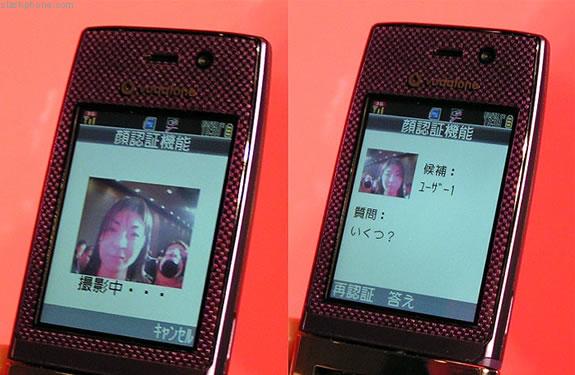
Face recognition isn't just done at home courtesy of MyHeritage.com, but on-the-go with yet another release of face recognition authentication for cell phones by a leading mobile operator in Japan :

"Security features include biometric authentication (user's face) and compatibility with DoCoMo's Omakase Lock™ remote locking service, as well as the Data Security Service™ for backing up phonebooks and other important data on a network server. The model can function as an e-wallet, timecard and personal identification card for accessing restricted areas."

The concept has been around for quite some time, but with Japan representing one of the most mature markets for mobile devices -- right after South Korea -- the feature would briefly gain popularity and acceptance. The interesting part is the security vs usability issue as if the face recognition doesn't provide perfect results in every environment and under external factors such as darkness or even brightness, by the time the technology matures, a secret question to further authenticate or good old PIN code would do the work.

Here's a very well sorted library of various research on the topic, and an interesting service that's sharing a stolen phone's photos.


Saturday, October 28, 2006

Real-Time Spam Outbreak Statistics

Following my previous posts on "Real-Time PC Zombie Statistics", and "Email Spam Harvesting Statistics", you may also find WatchGuard's recently released real-time spam outbreak statistics entertaining :

"Once in a while as I'm getting flooded with some particularly repititious spam bomb, I wonder whether other networks are receiving the same dumb stuff. And occasionally, I wonder where it originated from.

Both questions are readily answered with a nifty Web utility provided by the CommTouch Detection Center. [Full disclosure: WatchGuard's spamBlocker product is powered by a license with CommTouch.] The utility shows a map of the world, with red spots indicating the approximate location of new spam outbreaks. If you hover your cursor over any of the red zones, a popup box shows the subject lines of the most recently detected spam. It's an easy, instant way to verify whether an email you received is part of a spampaign."

Naturally, the stats are only limited to the vendor's sensor network worldwide, whereas you still get the chance to feel the dynamics of spam outbreaks worldwide. I often speculate -- and got the case studies proving it -- that the more pressure is put on spammers, phishers and malware authors, the higher would their consolidation become. For the time being, spammers are mostly utilizing the cost-effective one-to-many communication model, and their ROI -- where the investment is in renting infected zombie PCs -- is positive by default without them even segmenting, targeting and actually reaching the most gullible audience. If spammers change this model, it would mean a much faster email services worldwide, but for the time being, number of messages sent compared to basic marketing practices seems to be the benchmark.

Spammers got the "contact points", malware authors the platform and the payload, and phishers the social engineering "know-how", I find spammers missing so badly these days -- the trade off for delivering the spam through content obfuscation is the quality of the message itself. Trouble is, they'll soon realize that marriage is better than the divorce and unite forces given the pressure.

UPDATE: "Bot nets likely behind jump in spam" discusses the consolidation, or the possibility for services on demand. Via Sunbelt's blog.

Thursday, October 26, 2006

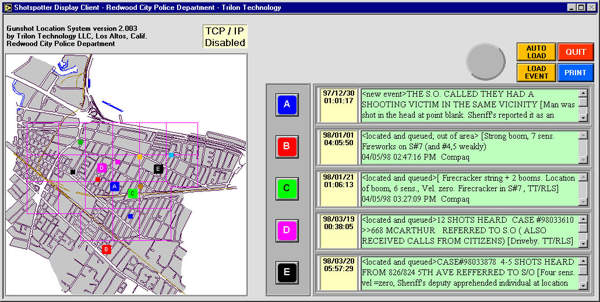
ShotSpotter - Gunshot Sensors Network

ShotSpotter is :

"a network of noise sensors that identifies and pinpoints gunfire. Over the past few weeks, the technology has guided police to three homicides in Southeast Washington, and in one case officers got there rapidly enough to make an arrest.

ShotSpotter complements 48 surveillance cameras installed in many city neighborhoods. But unlike the cameras, which are checked after the fact, ShotSpotter gets word to police as soon as bullets start flying -- in many cases before anyone has a chance to call 911. Over the past two months, the sensors, roughly the size of coffee cans, have been hidden atop buildings in many sections of Southeast Washington."

Innovative, but how well is it performing when it comes to filtering a three cars synchronized gangsta rap music, and the not so fashionable, but adaptive use of silencers? It makes me think on the possibility of disinformation by criminals knowing someone's listening and responding to gunshots. On the other hand, it could have ever wider acceptance in a war zone acting as an early warning system.

UPDATE: Techdirt's comments on the system.

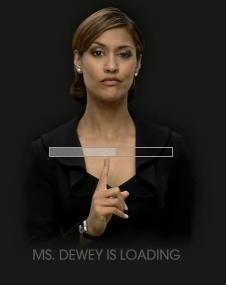
Ms. Dewey on Microsoft and Security

She sure knows "all these little ones and zeroes", and your social security number altogether. I like the idea, reminds of the futuristic holograms of Einstein acting as interactive Wikipedia which when asked about WWII starts projecting battles -- she's thinking way too long, but as she pointed out she's just a chick in front of your computer.