There's been a lot of buzz recently on the FCC's order requiring all VoIP providers to begin compliance with CALEA in order to lawfully intercept VoIP communications by the middle of 2007 . Yesterday, a U.S judge seems to have challenged the order, from the article :
"The skepticism expressed so openly toward the administration's case encouraged civil liberties and education groups that argued that the U.S. is improperly applying telephone-era rules to a new generation of Internet services. "Your argument makes no sense,'' U.S. Circuit Judge Harry T. Edwards told the lawyer for the Federal Communications Commission, Jacob Lewis. ''When you go back to the office, have a big chuckle. I'm not missing this. This is ridiculous. Counsel!' The Justice Department, which has lobbied aggressively on the subject, warned in court papers that failure to expand the wiretap requirements to the fast-growing Internet phone industry ''could effectively provide a surveillance safe haven for criminals and terrorists who make use of new communications services.''
What's worth mentioning is that on a wide scale VoIP services are often banned in many countries, ISPs don't tend to tolerate the traffic which on the other hand directly bypasses their VoIP offers, and even China, one of the largest telecom market continues to have concerns about VoIP. Companies also seem to be revising their practices while trying to block Skype, among the most popular VoIP applications. Rather interesting, T-Mobile just announced that it would ban VoIP on its 3G network, but is it inability to achieve compliance or direct contradiction with their business practices?
Whatever the reason, VoIP communications aren't everyone's favorite, but represent a revolution in cheap, yet reliable communications. The more easily a network is made wiretap-ready, the easier for attackers in both, the short, and the long-term to abuse the backdoored idea itself, so don't. You can actually go through the 2005's Wiretap Report and figure out the cost of wiretapping, limiting it by promoting insecure networks isn't going to solve anything, given you actually know what you're looking for at the bottom line.
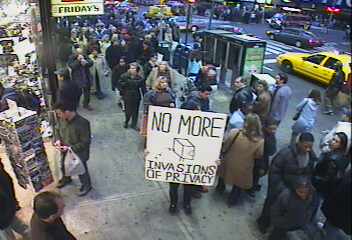
Image courtesy of EFF's "Monsters of Privacy" Animation.
Related resources :
VoIP, FCC, CALEA
Communications Assistance for Law Enforcement Act and Broadband Access and Services
Secure VoIP - Zfone
Sniffing VoIP Using Cain
Oreka VoIP Sniffer
Tuesday, May 09, 2006
Wiretapping VoIP Order Questioned


 Independent Security Consultancy, Threat Intelligence Analysis (OSINT/Cyber Counter Intelligence) and Competitive Intelligence research on demand. Insightful, unbiased, and client-tailored assessments, neatly communicated in the form of interactive reports - because anticipating the emerging threatscape is what shapes the big picture at the end of the day. Approach me at dancho.danchev@hush.com
The Cell-phone Industry and Privacy Advocates VS Cell Phone Tracking
I've once mentioned various privacy issues related to mobile devices, the growing trend of "assets tracking", and of course, cell phones tracking. Yesterday I came across to great summary of the current situation -- privacy groups make a point of it. From the article :
"Real-time tracking of cell phones is possible because mobile phones are constantly sending data to cell towers, which allows incoming calls to be routed correctly. The towers record the strength of the signal along with the side of the tower the signal is coming from. This allows the phone's position to be easily triangulated to within a few hundred yards. But the legal grounds for obtaining a tracking order is murky -- not surprising since technology often outpaces legislation. The panel agreed that Congress should write rules governing what level of suspicion cops need to have before tracking people through their cell phones."
While on the other hand, there's also an ongoing commercialization of the service by the industry itself, if the government were to start using practices like these with grey subpoenas, it would undermine the customers' trust in the industry and BigBrother is going to get even bigger. Enthusiasts are already experimenting with DIY cell phone tracking abilities, so if you worry about being tracked through your phone, you should also start worrying about having an extra one in your bag. Physical insecurities such as digital forensics on cell phones, even counter-offerings are today's reality, while flexible lawful wiretapping may still be taking one way or another -- I guess the NSA got all the attention recently, with their domestic spying program.
As the Mindmaker pointed out, we must assume that we are trackable wherever we go, but I think this dependence would get even more abused in the future by the time proposed laws match with the technology.

"Real-time tracking of cell phones is possible because mobile phones are constantly sending data to cell towers, which allows incoming calls to be routed correctly. The towers record the strength of the signal along with the side of the tower the signal is coming from. This allows the phone's position to be easily triangulated to within a few hundred yards. But the legal grounds for obtaining a tracking order is murky -- not surprising since technology often outpaces legislation. The panel agreed that Congress should write rules governing what level of suspicion cops need to have before tracking people through their cell phones."
While on the other hand, there's also an ongoing commercialization of the service by the industry itself, if the government were to start using practices like these with grey subpoenas, it would undermine the customers' trust in the industry and BigBrother is going to get even bigger. Enthusiasts are already experimenting with DIY cell phone tracking abilities, so if you worry about being tracked through your phone, you should also start worrying about having an extra one in your bag. Physical insecurities such as digital forensics on cell phones, even counter-offerings are today's reality, while flexible lawful wiretapping may still be taking one way or another -- I guess the NSA got all the attention recently, with their domestic spying program.
As the Mindmaker pointed out, we must assume that we are trackable wherever we go, but I think this dependence would get even more abused in the future by the time proposed laws match with the technology.
Independent Security Consultancy, Threat Intelligence Analysis (OSINT/Cyber Counter Intelligence) and Competitive Intelligence research on demand. Insightful, unbiased, and client-tailored assessments, neatly communicated in the form of interactive reports - because anticipating the emerging threatscape is what shapes the big picture at the end of the day. Approach me at dancho.danchev@hush.com
Monday, May 08, 2006
Shaping the Market for Security Vulnerabilities Through Exploit Derivatives
In a previous post "0bay - how realistic is the market for security vulnerabilities?" I gave a brief overview of the current market infomediaries and their position, listed various research I recommend you to go through, and speculated on an auction based market model.
During April, at the CanSecWest Security Conference "Groups argued over merits of flaw bounties" some quotes :
"The only economic model that does not make sense to me is the vendor's," Sutton said. "They get to know about a vulnerabilities ahead of time, but they are unwilling to pay for them." - Michael Sutton
"What I can give people who find vulnerabilities is a small amount of fame. iDefense can give them $10,000." - Darius Wiles
"As a civil rights issue, selling vulnerabilities is just fine. As a keeping-the-customers safe issue, it's junk." - Novell director of software engineering Crispin
"If I come to you and offer to sell you a vulnerability in your product, I am going to be cuffed and arrested," he told the representatives of software makers on the panel." - Matthew Murphy
And the discussion is reasonably pretty hot with a reason. Back in January Microsoft expressed their opinion on the informediaries based market model like :
"One day after iDefense, of Reston, Va., announced the bounty as part of a newly implemented quarterly hacking challenge, a spokesperson for Microsoft, based in Redmond, Wash., said paying for flaws is not the best way to secure software products. "We do not believe that offering compensation for vulnerability information is the best way [researchers] can help protect customers," the spokesperson said in a statement sent to eWEEK. "
and while Microsoft talks about responsible disclosure, that's exactly the type of model I don't really think exist anymore. Peter Mell made a good point that "I don't support this activity. Basically, it enables third parties to unfairly focus attention on a particular vendor or product. It does not help security in the industry," Mell said in an interview with eWEEK." -- but it still offers the opportunity to bring order into the chaos doesn't it?
The WMF vulnerability apparently got purched for $4000 and I among the few scenarios that I mentioned were on vendors purchasing vulnerabilities and requested vulnerabilities, or a reverse model :
"requested vulnerabilities are the worst case scenario I could think of at the moment. Why bother and always get excited about an IE vulnerability, when you know person/company X are running Y AV scanner, use X1 browser as a security through obscurity measure. That's sort of reverse model compared to current one where researchers "push" their findings, what if it turns into a "pull" approach, "I am interested in purchasing vulnerabilities affecting that version of that software", would this become common, and how realistic is it at the bottom line?"
Coming across 0day vulnerabilities for sale, I also came across Rainer Boehme's great research on various market models, among them exploit derivatives. Have you ever though of using exploit derivatives, on the called "futures market"? I think the idea has lots of potential, and he described it as :
"Instead of trading sensitive vulnerability information directly, the market mechanism is build around contracts that pay out a defined sum in case of security events. For instance, consider a contract that pays its owner the sum of 100 EUR on say 30 June 2006 if there exists a remote root exploit against a precisely specified version of ssh on a defined platform."
The OS/Vendor/Product/Version/Deadline type of reverse model that I also mentioned is a good targeted concept if it were used by vendors for instance, and while it has potential to have a better control over the market, the lack of common and trusted body to take the responsibility to target Windows and Apple 50/50 for istance, still makes me think. The best part is how it would motivate researchers at the bottom line -- deadlines result in spontaneous creativity sometimes.
More on the topic of security vulnerabilities and commercializing the market, in a great article by Jennifer Granick (remember Michael Lynn's case?) she said that :
"I'm more concerned that commercialization, while it promotes discovery, will interfere with the publication of vulnerability information. The industry adopted responsible disclosure because almost everyone agrees that members of the public need to know if they are secure, and because there is inherent danger in some people having more information than others. Commercialization throws that out the window. Brokers that disclose bugs to their selected list of subscribers are necessarily withholding important information from the rest of the public. Brokers may eventually issue public advisories, but in the meantime, only the vendor and subscribers know about the problem."
Who should be empowered at the bottom line, the informediaries centralizing the process, or the security researchers/vulnerability diggers starting to seek bids for their reseach efforts?
On the other hand, I think that the current market model suffers from a major weakness and that is the need for achieving faster liquidity if we can start talking about such.
Basically, sellers of vulnerabilities want to get their commissions as soon as possible, which is where the lucrative underground market easily develops. While I am aware of cases where insurers are already purchasing vulnerabilities to hedge risks until tomorrow I guess, anyone would put some effort into obtaining a critical MS vulnerability given a deadline and hefty reward, but who's gonna act as a social planner here?
During April, at the CanSecWest Security Conference "Groups argued over merits of flaw bounties" some quotes :
"The only economic model that does not make sense to me is the vendor's," Sutton said. "They get to know about a vulnerabilities ahead of time, but they are unwilling to pay for them." - Michael Sutton
"What I can give people who find vulnerabilities is a small amount of fame. iDefense can give them $10,000." - Darius Wiles
"As a civil rights issue, selling vulnerabilities is just fine. As a keeping-the-customers safe issue, it's junk." - Novell director of software engineering Crispin
"If I come to you and offer to sell you a vulnerability in your product, I am going to be cuffed and arrested," he told the representatives of software makers on the panel." - Matthew Murphy
And the discussion is reasonably pretty hot with a reason. Back in January Microsoft expressed their opinion on the informediaries based market model like :
"One day after iDefense, of Reston, Va., announced the bounty as part of a newly implemented quarterly hacking challenge, a spokesperson for Microsoft, based in Redmond, Wash., said paying for flaws is not the best way to secure software products. "We do not believe that offering compensation for vulnerability information is the best way [researchers] can help protect customers," the spokesperson said in a statement sent to eWEEK. "
and while Microsoft talks about responsible disclosure, that's exactly the type of model I don't really think exist anymore. Peter Mell made a good point that "I don't support this activity. Basically, it enables third parties to unfairly focus attention on a particular vendor or product. It does not help security in the industry," Mell said in an interview with eWEEK." -- but it still offers the opportunity to bring order into the chaos doesn't it?
The WMF vulnerability apparently got purched for $4000 and I among the few scenarios that I mentioned were on vendors purchasing vulnerabilities and requested vulnerabilities, or a reverse model :
"requested vulnerabilities are the worst case scenario I could think of at the moment. Why bother and always get excited about an IE vulnerability, when you know person/company X are running Y AV scanner, use X1 browser as a security through obscurity measure. That's sort of reverse model compared to current one where researchers "push" their findings, what if it turns into a "pull" approach, "I am interested in purchasing vulnerabilities affecting that version of that software", would this become common, and how realistic is it at the bottom line?"
Coming across 0day vulnerabilities for sale, I also came across Rainer Boehme's great research on various market models, among them exploit derivatives. Have you ever though of using exploit derivatives, on the called "futures market"? I think the idea has lots of potential, and he described it as :
"Instead of trading sensitive vulnerability information directly, the market mechanism is build around contracts that pay out a defined sum in case of security events. For instance, consider a contract that pays its owner the sum of 100 EUR on say 30 June 2006 if there exists a remote root exploit against a precisely specified version of ssh on a defined platform."
The OS/Vendor/Product/Version/Deadline type of reverse model that I also mentioned is a good targeted concept if it were used by vendors for instance, and while it has potential to have a better control over the market, the lack of common and trusted body to take the responsibility to target Windows and Apple 50/50 for istance, still makes me think. The best part is how it would motivate researchers at the bottom line -- deadlines result in spontaneous creativity sometimes.
More on the topic of security vulnerabilities and commercializing the market, in a great article by Jennifer Granick (remember Michael Lynn's case?) she said that :
"I'm more concerned that commercialization, while it promotes discovery, will interfere with the publication of vulnerability information. The industry adopted responsible disclosure because almost everyone agrees that members of the public need to know if they are secure, and because there is inherent danger in some people having more information than others. Commercialization throws that out the window. Brokers that disclose bugs to their selected list of subscribers are necessarily withholding important information from the rest of the public. Brokers may eventually issue public advisories, but in the meantime, only the vendor and subscribers know about the problem."
Who should be empowered at the bottom line, the informediaries centralizing the process, or the security researchers/vulnerability diggers starting to seek bids for their reseach efforts?
On the other hand, I think that the current market model suffers from a major weakness and that is the need for achieving faster liquidity if we can start talking about such.
Basically, sellers of vulnerabilities want to get their commissions as soon as possible, which is where the lucrative underground market easily develops. While I am aware of cases where insurers are already purchasing vulnerabilities to hedge risks until tomorrow I guess, anyone would put some effort into obtaining a critical MS vulnerability given a deadline and hefty reward, but who's gonna act as a social planner here?
Independent Security Consultancy, Threat Intelligence Analysis (OSINT/Cyber Counter Intelligence) and Competitive Intelligence research on demand. Insightful, unbiased, and client-tailored assessments, neatly communicated in the form of interactive reports - because anticipating the emerging threatscape is what shapes the big picture at the end of the day. Approach me at dancho.danchev@hush.com
Thursday, May 04, 2006
The Current State of Web Application Worms
Remeber the most recent Yahoo! Mail's XSS vulnerabilities, or the MySpace worm? I just read through a well written summary on Web Application Worms by Jeremiah Grossman, from WhiteHat Security, "Cross-Site Scripting Worms and Viruses - The Impending Threat and the Best Defense", an excerpt :
"Samy, the author of the worm, was on a mission to be famous, and as such the payload was relatively benign. But consider what he might have done with control of over one million Web browsers and the gigabits of bandwidth at their disposal--browsers that were also potentially logged-in to Google, Yahoo, Microsoft Passport, eBay, web banks, stock brokerages, blogs, message boards, or any other web-based applications. It’s critical that we begin to understand the magnitude of the risk associated with XSS malware and the ways that companies can defend themselves and their users. Especially when the malware originates from trusted websites and aggressive authors. In this white paper we will provide an overview of XSS; define XSS worms; and examine propagation methods, infection rates, and potential impact. Most importantly, we will outline immediate steps enterprises can take to defend their websites."
It provides an overview of Cross-Site Scripting (XSS), Methods of Propagation, comments on the First XSS Worm, a worst case scenario, and of course protection methods, nice graphs and overview of this emerging trend. In my "Future Trends of Malware" research I indeed pointed out on its emergence :
"How would a malware author be able to harness the power of the trust established between, let’s say, ComScore’s top 10 sites and their visitors? Content spoofing is the where the danger comes from in my opinion, and obvious web application vulnerabilities, or any bugs whose malicious payload could be exposed to their audiences. In case you reckon, a nasty content spoofing on Yahoo!’s portal resulted in the following possibility for driving millions of people at a certain URL, if I don’t trust what I see on Yahoo.com or Google.com, why bother using the Net at all is a common mass attitude of course. Any web property attracting a relatively large number of visitors should be considered as a propagation vector, for both, malware authors, and others such as phishers, or botnet brokers for instance."
Monetizing mobile malware is among the other trends I also indicated, and the RedBrowser seems to be the most recent example of this as it randomly chooses a premium-rate number from the following list, and sends a SMS message generating revenue for the attacker : 08293538938, 08001738938, 08180238938, 08229238938, 08441238938, 08287038938, 08187938938, 08189038938, 08217838938, 08446838938.
I summarized the key points back than as :
"The number and penetration of mobile devices greatly outpaces that of the PCs. Malware authors are actively experimenting and of course, progressing with their research on mobile malware. The growing monetization of mobile devices, that is generating revenues out of users and their veto power on certain occasions, would result in more development in this area by malicious authors. SPIM would also emerge with authors adapting their malware for gathering numbers. Mobile malware is also starting to carry malicious payload. Building awareness on the the issue, given the research already done by several vendors, would be a wise idea."
Among the first folks to discuss the topic of web application malware was Robert from CGISecurity.com in his "Anatomy of Web Application Worm" paper back in 2002, and with the easy and speed of discovering web application vulnerabilities in major portals it's up to the imagination of the attacker -- as the paper points out Samy only wanted to make 1 million friends, what if he wanted to do something else?
"Cross-Site Scripting Worms and Viruses - The Impending Threat and the Best Defense" also argues on Samy being the fastest worm, though single-packet UDP worms, according to a research on the "Top Speed of Flash Worm" by "Simulating a flash version of Slammer, calibrated by current Internet latency measurements and observed worm packet delivery rates, we show that a worm could saturate 95% of one million vulnerable hosts on the Internet in 510 milliseconds. A similar worm using a TCP based service could 95% saturate in 1.3 seconds. The speeds above are achieved with flat infection trees and packets sent at line" rates.
Is it the speed or the size of the infected targeted group that matters, and what if Web 2.0 worms can achieve exactly the two of these?
More resources on the topic in case you are interested :
Web-based Malware & Honeypots - phpBB bots/worms
New MySpace XSS worm circulating
Description of a Yahoo! Mail XSS vulnerability
Evolution of Web-based worms
The Latest in Internet Attacks: Web Application Worms
Web Application Worms : Myth or Reality?
Analysis of Web Application Worms and Viruses
Paros - for web application security assessment

"Samy, the author of the worm, was on a mission to be famous, and as such the payload was relatively benign. But consider what he might have done with control of over one million Web browsers and the gigabits of bandwidth at their disposal--browsers that were also potentially logged-in to Google, Yahoo, Microsoft Passport, eBay, web banks, stock brokerages, blogs, message boards, or any other web-based applications. It’s critical that we begin to understand the magnitude of the risk associated with XSS malware and the ways that companies can defend themselves and their users. Especially when the malware originates from trusted websites and aggressive authors. In this white paper we will provide an overview of XSS; define XSS worms; and examine propagation methods, infection rates, and potential impact. Most importantly, we will outline immediate steps enterprises can take to defend their websites."
It provides an overview of Cross-Site Scripting (XSS), Methods of Propagation, comments on the First XSS Worm, a worst case scenario, and of course protection methods, nice graphs and overview of this emerging trend. In my "Future Trends of Malware" research I indeed pointed out on its emergence :
"How would a malware author be able to harness the power of the trust established between, let’s say, ComScore’s top 10 sites and their visitors? Content spoofing is the where the danger comes from in my opinion, and obvious web application vulnerabilities, or any bugs whose malicious payload could be exposed to their audiences. In case you reckon, a nasty content spoofing on Yahoo!’s portal resulted in the following possibility for driving millions of people at a certain URL, if I don’t trust what I see on Yahoo.com or Google.com, why bother using the Net at all is a common mass attitude of course. Any web property attracting a relatively large number of visitors should be considered as a propagation vector, for both, malware authors, and others such as phishers, or botnet brokers for instance."

Monetizing mobile malware is among the other trends I also indicated, and the RedBrowser seems to be the most recent example of this as it randomly chooses a premium-rate number from the following list, and sends a SMS message generating revenue for the attacker : 08293538938, 08001738938, 08180238938, 08229238938, 08441238938, 08287038938, 08187938938, 08189038938, 08217838938, 08446838938.
I summarized the key points back than as :
"The number and penetration of mobile devices greatly outpaces that of the PCs. Malware authors are actively experimenting and of course, progressing with their research on mobile malware. The growing monetization of mobile devices, that is generating revenues out of users and their veto power on certain occasions, would result in more development in this area by malicious authors. SPIM would also emerge with authors adapting their malware for gathering numbers. Mobile malware is also starting to carry malicious payload. Building awareness on the the issue, given the research already done by several vendors, would be a wise idea."
Among the first folks to discuss the topic of web application malware was Robert from CGISecurity.com in his "Anatomy of Web Application Worm" paper back in 2002, and with the easy and speed of discovering web application vulnerabilities in major portals it's up to the imagination of the attacker -- as the paper points out Samy only wanted to make 1 million friends, what if he wanted to do something else?

"Cross-Site Scripting Worms and Viruses - The Impending Threat and the Best Defense" also argues on Samy being the fastest worm, though single-packet UDP worms, according to a research on the "Top Speed of Flash Worm" by "Simulating a flash version of Slammer, calibrated by current Internet latency measurements and observed worm packet delivery rates, we show that a worm could saturate 95% of one million vulnerable hosts on the Internet in 510 milliseconds. A similar worm using a TCP based service could 95% saturate in 1.3 seconds. The speeds above are achieved with flat infection trees and packets sent at line" rates.
Is it the speed or the size of the infected targeted group that matters, and what if Web 2.0 worms can achieve exactly the two of these?
More resources on the topic in case you are interested :
Web-based Malware & Honeypots - phpBB bots/worms
New MySpace XSS worm circulating
Description of a Yahoo! Mail XSS vulnerability
Evolution of Web-based worms
The Latest in Internet Attacks: Web Application Worms
Web Application Worms : Myth or Reality?
Analysis of Web Application Worms and Viruses
Paros - for web application security assessment
Independent Security Consultancy, Threat Intelligence Analysis (OSINT/Cyber Counter Intelligence) and Competitive Intelligence research on demand. Insightful, unbiased, and client-tailored assessments, neatly communicated in the form of interactive reports - because anticipating the emerging threatscape is what shapes the big picture at the end of the day. Approach me at dancho.danchev@hush.com
Travel Without Moving - Typhoon Class Submarines
In previous posts "Security quotes : a FSB (successor to the KGB) analyst on Google Earth", "Suri Pluma - a satellite image processing tool and visualizer", "The "threat" by Google Earth has just vanished in the air" I talked about various issues related to satellite imagery and security.
Moreover, I'm also actively covering various emerging Space Warfare issues, and with the recent speculation that the Okno ELINT complex in Tajikistan is becoming Russian and different "schools of thought", there's a lot to come for sure. Google Maps/Earth did not only restart the real estate industry, it made the world a smaller place, a more competitive one, and hopefully a safer one if security counts here.
As of today, I decided to start posting a weekly section, the "Travel Without Moving" series, presenting interesting and publicly obtained imagery of sights that somehow made me an impression. The other day I came across to a (perhaps scraped by now) Typhoon Class Submarines at GoogleSightseeing.com -- the largest and quietest types of submarines.
That's perhaps the perfect moment to mention the cool pictures of a Soviet Underground Submarine Base in the Nuclear Submarine Base that "Until the collapse of the Soviet Union in 1991 Balaklava was one of the most secret towns in Russia. 10km south eas of Sevastopol on the Black Sea Coast, this small town was the home to a Nuclear Submarine Base." Take a tour for yourself!

Moreover, I'm also actively covering various emerging Space Warfare issues, and with the recent speculation that the Okno ELINT complex in Tajikistan is becoming Russian and different "schools of thought", there's a lot to come for sure. Google Maps/Earth did not only restart the real estate industry, it made the world a smaller place, a more competitive one, and hopefully a safer one if security counts here.
As of today, I decided to start posting a weekly section, the "Travel Without Moving" series, presenting interesting and publicly obtained imagery of sights that somehow made me an impression. The other day I came across to a (perhaps scraped by now) Typhoon Class Submarines at GoogleSightseeing.com -- the largest and quietest types of submarines.
That's perhaps the perfect moment to mention the cool pictures of a Soviet Underground Submarine Base in the Nuclear Submarine Base that "Until the collapse of the Soviet Union in 1991 Balaklava was one of the most secret towns in Russia. 10km south eas of Sevastopol on the Black Sea Coast, this small town was the home to a Nuclear Submarine Base." Take a tour for yourself!
Independent Security Consultancy, Threat Intelligence Analysis (OSINT/Cyber Counter Intelligence) and Competitive Intelligence research on demand. Insightful, unbiased, and client-tailored assessments, neatly communicated in the form of interactive reports - because anticipating the emerging threatscape is what shapes the big picture at the end of the day. Approach me at dancho.danchev@hush.com
Wednesday, May 03, 2006
Biased Privacy Violation
This is a very interesting initiative, going beyond the usual MySpace's teen heaven privacy issues, but directly exposing the mature audience in a way I find as a totally biased one. Girls writing stories on men that supposedly chated on them. DontDateHimGirl.com aims to :
"DontDateHimGirl.com is an online resource for women who have shared the experience of dating a no-good man! Browse our search engine of alleged cheaters, liars and cads right now! This controversial site has been featured on MSNBC, the Today Show, ABC News, CNN and Entertainment Tonight! There is finally a way for women to check a guy out BEFORE dating, marrying or otherwise committing to him! Warn other women about the men who have cheated, lied or used you! Register and become a member today! You'll receive our free newsletter and other valuable goodies! It's fast, easy and best of all, it's free! You'll be doing your sisters around the world an invaluable service! Don't Date Him Girl!"
Basically stuff like, "post a cheating man", "search for a cheating man", or browse through the 3593 ones already "categorized" as cheaters with personal stories and photos whenever available. What I feel they shouldn't do, is aggregate that kind of community powered personal details for third-parties, and making it searchable. Some stories are pretty fun and average enough to make you think :
"Quite a charmer in the beginning, as all guys tend to be. Called me beautiful, gorgeous.. kissed my forehead.. He did all the right things. He could do no wrong. We "dated" for a good 6 months, and things seemed to be going good. He was the love of my life. Lots of firsts with him, then he did a total 180. He stopped calling and didn't respond to my phone calls and/or messages. I was so distraught. I thought I did something to fuck things up. "
Perhaps she did, didn't she?! Still, that's entirely between them given they actually respect each other.
Don't get me wrong, there are pathological polygamists, but what's next, Local Google Maps to pin point the cheating areas around town?
To balance the powers, and make it even worse there's even a DontDateHerMan.com coming along, but try not to bring your personal life stuff to such an end, or is it just me? :)

"DontDateHimGirl.com is an online resource for women who have shared the experience of dating a no-good man! Browse our search engine of alleged cheaters, liars and cads right now! This controversial site has been featured on MSNBC, the Today Show, ABC News, CNN and Entertainment Tonight! There is finally a way for women to check a guy out BEFORE dating, marrying or otherwise committing to him! Warn other women about the men who have cheated, lied or used you! Register and become a member today! You'll receive our free newsletter and other valuable goodies! It's fast, easy and best of all, it's free! You'll be doing your sisters around the world an invaluable service! Don't Date Him Girl!"
Basically stuff like, "post a cheating man", "search for a cheating man", or browse through the 3593 ones already "categorized" as cheaters with personal stories and photos whenever available. What I feel they shouldn't do, is aggregate that kind of community powered personal details for third-parties, and making it searchable. Some stories are pretty fun and average enough to make you think :
"Quite a charmer in the beginning, as all guys tend to be. Called me beautiful, gorgeous.. kissed my forehead.. He did all the right things. He could do no wrong. We "dated" for a good 6 months, and things seemed to be going good. He was the love of my life. Lots of firsts with him, then he did a total 180. He stopped calling and didn't respond to my phone calls and/or messages. I was so distraught. I thought I did something to fuck things up. "
Perhaps she did, didn't she?! Still, that's entirely between them given they actually respect each other.
Don't get me wrong, there are pathological polygamists, but what's next, Local Google Maps to pin point the cheating areas around town?
To balance the powers, and make it even worse there's even a DontDateHerMan.com coming along, but try not to bring your personal life stuff to such an end, or is it just me? :)
Independent Security Consultancy, Threat Intelligence Analysis (OSINT/Cyber Counter Intelligence) and Competitive Intelligence research on demand. Insightful, unbiased, and client-tailored assessments, neatly communicated in the form of interactive reports - because anticipating the emerging threatscape is what shapes the big picture at the end of the day. Approach me at dancho.danchev@hush.com
Tuesday, May 02, 2006
April's Security Streams
Hi folks, it's about time to quickly summarize April's Security Streams. As of today, my blog is officially six months old and the feeling of witnessing change and improvements has always been a pleasant one. Blogging "my way" takes a lot of time, that is, posts going beyond "preaching" but emphasizing on "teaching", a little bit of investigative research, full-disclosure, and constructive key points on emerging or possible future trends related to infosec. Thanks for everyone's feedback, and actually reading not just going my posts as far as the average visitors' time spent is concerned!
1. "Wanna get yourself a portable Enigma encryption machine?"Already sold, but auctioned on Ebay, it's remarkable how the seller managed to preserve an original Enigma in such a condition, and the bids were worth it!
2. "The "threat" by Google Earth has just vanished in the air" Coming across Microsoft's Windows Live Local Street-Side Drive-by provoked contradictive thoughts, so I've decided to sum up recent ideas on the issue. The use of public satellite imagery for conducting OSINT is inevitable, while on the other hand the providers are simply making the world a smaller place. It is also questionable whether potential terrorists are "abroad" or within the countries themselves, that is knowing each and every corner of a possible "attack location", but with the ability to syndicate and share maps it would be naive not to think that they way you chat, they also do, and the way you plan activities while "zooming-out", they also do. At the bottom line, snooping from above might actually deal more with self-confidence than anything else. Have an opinion? Feel free to comment on the topic
3. "Insider fined $870" Virtual worlds are emerging and so are security techniques to steal someone's sword, be it through insiders, phishing, or trojan horse attacks. What's important to keep in mind when it comes to insiders is that on the majority of occasions you're are never aware that there's an ongoing potential breach on its way, and moreover, that the quantitative losses due to insiders are totally based on a company's sales projections, rather than successfully (if one can) measuring the value of intellectual property
4. "Securing political investments through censorship" We constantly talk on how the Internet is changing our daily lifes, our attitudes, and giving us the opportunity to tap into the biggest think-tank in the world -- on the majority of occasions for free. Internet censorship is still a very active practice by well-known regimes, while this post was trying to emphasize on the current situation - securing political investments through censorship
5. "Heading in the opposite direction" Companies and financial institutions are the most often targets of phishing attacks, and it's getting hard for them to both, convince their users and society that they're working on fighting the problem, and most importantly where's the real problem and how to fight it. In this post, I try to emphasize that building communications over a broken channel Bank2Customer over email is the worst possible strategy you could start executing. The irony in here is how in the way both, phishers and any bank in question may sometimes be using images stored on the banks server -- altogether!
6. "IM me" a strike order" It's a common myth that the military have came up with a Über secret and secure communications network, going beyond the Internet. And while there're such, they all suffer the same weakness, lack of usability, and budget deficits compared to IP based communications, that is the Internet. The post goes through research surveys on IMs in the military, and tries to bring more awareness on how age-old IM threats can easily exploit military IM communications as well
7. "Catching up on how to lawfully intercept in the digital era" On as daily basis we discuss security breaches, threats, privacy violations, whereas constantly misses the fact that there's a practice called lawful interception, namely that even if the NSA's domestic spying program got so much attention and concerns, it doesn't mean they aren't going to continue keeping themselves up-to-date with what is going wherever OSINT, SIGINT and HUMINT are applicable. The bottom line is that a person behind a CCTV camera's network is also under surveillance, so I advise you go through a very good resource on the topic, the Surveillance and Society Journal
8. "On the Insecurities of the Internet" IP spoofing by default, DNS and BGP abuses, Distributed Reflection Denial of Service Attacks, are among the ones worth mentioning, while perhaps the biggest insecurity lies in the fact that the Internet we're all striving to adapt for E-commerce and E-business, was developed as a scientific network we got used to so fast
9. "Distributed cracking of a utopian mystery code" Continuing the "distributed concepts" series of posts, this one deals with virtual worlds, and a wise idea on how to keep the players coming back for more -- let them even bruteforce the next part of the puzzle
10. "Fighting Internet's email junk through licensing" China's Internet population is about to surpass the U.S one and it would continue to grow resulting in China becoming the "novice" king of insecure networks. Trying to centrally control spam, they you can control the flow of traffic going out and coming in the country is a typical, but weak approach that could have worked years ago as no one needs a mail server to generate spam of phishing attacks these days. In respect to their concerns of users learning more about infosec, in China a cyber dissident is a heroic potential hacker, one that can easily bypass the Great Firewall and spread the word on how it can be done. As a matter of fact, PBS has done an outstanding job in their Tank Man episode, and while many considered the Chinese students' inability to recognize the infamous photo, what they were actually afraid of is showing a face-gesture that they indeed recognized it -- as they did of course.
11. "Would somebody please buy this Titan 1 ICBM Missile Base?" I think the buyer of this base should have better though of what he's buying, or let's just say how on Earth was he expecting to break-even given he missed the post-cold war momentum itself? It's indeed once in a lifetime purchase that you would think twice before not purchasing, and so I hope the auction would continue to attract visitors the way it is -- high-profit margins whenever the momentum is lost is a "lost case" by itself
12. "Spotting valuable investments in the information security market" An in-depth post on current market and vendor trends, as well as more info on the, now fully realistic acquisition of SiteAdvisor my McAfee, something I've blogged about in January. It's great to know that both parties came across the posts themselves, and to witness how such a wide-scale community power, but still backed by technology, startup got so easily acquired. What the acquirer must now ensure, is that it doesn't cannibalize the culture at SiteAdvisor -- every day is a startup day for us type of attitude is a permanent generator of creativity and attitude
13. "Digital forensics - efficient data acquisition devices" A resourceful post mentioning on the release of the CellDEK, no, it's not a portable DJs one, but a acquisition device detecting over 160 cell phone models and having the capacity to simultaneously acquire it from numerous devices all at once. Virtual cyber crime is all about quality forensics, whereas different legislations and approaches for gathering and coordinating such data across various countries remains a problem
14. "The anti virus industry's panacea - a virus recovery button" Try to get this on the Super Bowl and watch a generating falling for the lack of complexity in this "solution". Gratefully, I got many comments from readers with cheers on mentioning this and how useless the button is at the bottom line
15. "Why's that radar screen not blinking over there?" Quite some sites picked up the story, yet we can always question, and than again, so what? In a crucial situation a scenario like this could prove invaluable for the final outcome, but right now it's just a PR activity from the other side of the camp. Symmetric warfare is a tangible defense/offensive concept, whereas asymmetric warfare is fully capable of balancing powers -- to a certain extend as no matter how much NCW you put on the ground, you would still need "tangible" forces on the finish line
16. "25 ways to distinguish yourself -- and be happy?" A little bit of self-esteem is never too much and that's what these series can help you with
17. "Wild Wild Underground" An in-depth summary of some findings I intended to post for quite some time, but didn't have the time to. If you just take yourself some time to rethink over, you would hopefully realize that a guy like this is capable of recruiting people who actually come up with their own algorithms -- beyond their will in one way or another. Moreover, responding to comments I received, of course I did report the links, which are now down, as well as some of the forum posts I managed to digg. Ryan1918 is rather active though
18. "In between the lines of personal and sensitive information" Government reclassification of documents isn't the most pragmatic way, as these have already been online once, therefore someone out there still keeps a copy, and is now more than ever motivated to disseminate it, given someone is trying to censor it. I feel a common structure of the different types of information, formal training for those dealing with that type of info etc. and putting in place risk management solutions, considering that humans are totally not to be trusted (are computers to be?) is a way to mitigate these risks. Trying to censor something you end up making it even more popular that it could have been without you censoring it, just a thought
19. "DIY Marketing Culture" Personalization and Customization are emerging by default, and so is virtual viral marketing. In this post I mention the possibility to get your own custom MMs, and FireFox's FireFlicks initiative
20. "A comparison of US and European Privacy Practices" You can rarely come across a infosec survey with well formulated questions, ones that are the basis of a quality one. I think this company did a very good job in formulating and summarizing the outcome of a very trendy topic
Updated to add the averages for each month since I've started tracking my readers, looks nice, and in case you're interested you can also go through the summaries of previous months.

1. "Wanna get yourself a portable Enigma encryption machine?"Already sold, but auctioned on Ebay, it's remarkable how the seller managed to preserve an original Enigma in such a condition, and the bids were worth it!
2. "The "threat" by Google Earth has just vanished in the air" Coming across Microsoft's Windows Live Local Street-Side Drive-by provoked contradictive thoughts, so I've decided to sum up recent ideas on the issue. The use of public satellite imagery for conducting OSINT is inevitable, while on the other hand the providers are simply making the world a smaller place. It is also questionable whether potential terrorists are "abroad" or within the countries themselves, that is knowing each and every corner of a possible "attack location", but with the ability to syndicate and share maps it would be naive not to think that they way you chat, they also do, and the way you plan activities while "zooming-out", they also do. At the bottom line, snooping from above might actually deal more with self-confidence than anything else. Have an opinion? Feel free to comment on the topic
3. "Insider fined $870" Virtual worlds are emerging and so are security techniques to steal someone's sword, be it through insiders, phishing, or trojan horse attacks. What's important to keep in mind when it comes to insiders is that on the majority of occasions you're are never aware that there's an ongoing potential breach on its way, and moreover, that the quantitative losses due to insiders are totally based on a company's sales projections, rather than successfully (if one can) measuring the value of intellectual property
4. "Securing political investments through censorship" We constantly talk on how the Internet is changing our daily lifes, our attitudes, and giving us the opportunity to tap into the biggest think-tank in the world -- on the majority of occasions for free. Internet censorship is still a very active practice by well-known regimes, while this post was trying to emphasize on the current situation - securing political investments through censorship
5. "Heading in the opposite direction" Companies and financial institutions are the most often targets of phishing attacks, and it's getting hard for them to both, convince their users and society that they're working on fighting the problem, and most importantly where's the real problem and how to fight it. In this post, I try to emphasize that building communications over a broken channel Bank2Customer over email is the worst possible strategy you could start executing. The irony in here is how in the way both, phishers and any bank in question may sometimes be using images stored on the banks server -- altogether!
6. "IM me" a strike order" It's a common myth that the military have came up with a Über secret and secure communications network, going beyond the Internet. And while there're such, they all suffer the same weakness, lack of usability, and budget deficits compared to IP based communications, that is the Internet. The post goes through research surveys on IMs in the military, and tries to bring more awareness on how age-old IM threats can easily exploit military IM communications as well
7. "Catching up on how to lawfully intercept in the digital era" On as daily basis we discuss security breaches, threats, privacy violations, whereas constantly misses the fact that there's a practice called lawful interception, namely that even if the NSA's domestic spying program got so much attention and concerns, it doesn't mean they aren't going to continue keeping themselves up-to-date with what is going wherever OSINT, SIGINT and HUMINT are applicable. The bottom line is that a person behind a CCTV camera's network is also under surveillance, so I advise you go through a very good resource on the topic, the Surveillance and Society Journal
8. "On the Insecurities of the Internet" IP spoofing by default, DNS and BGP abuses, Distributed Reflection Denial of Service Attacks, are among the ones worth mentioning, while perhaps the biggest insecurity lies in the fact that the Internet we're all striving to adapt for E-commerce and E-business, was developed as a scientific network we got used to so fast
9. "Distributed cracking of a utopian mystery code" Continuing the "distributed concepts" series of posts, this one deals with virtual worlds, and a wise idea on how to keep the players coming back for more -- let them even bruteforce the next part of the puzzle
10. "Fighting Internet's email junk through licensing" China's Internet population is about to surpass the U.S one and it would continue to grow resulting in China becoming the "novice" king of insecure networks. Trying to centrally control spam, they you can control the flow of traffic going out and coming in the country is a typical, but weak approach that could have worked years ago as no one needs a mail server to generate spam of phishing attacks these days. In respect to their concerns of users learning more about infosec, in China a cyber dissident is a heroic potential hacker, one that can easily bypass the Great Firewall and spread the word on how it can be done. As a matter of fact, PBS has done an outstanding job in their Tank Man episode, and while many considered the Chinese students' inability to recognize the infamous photo, what they were actually afraid of is showing a face-gesture that they indeed recognized it -- as they did of course.
11. "Would somebody please buy this Titan 1 ICBM Missile Base?" I think the buyer of this base should have better though of what he's buying, or let's just say how on Earth was he expecting to break-even given he missed the post-cold war momentum itself? It's indeed once in a lifetime purchase that you would think twice before not purchasing, and so I hope the auction would continue to attract visitors the way it is -- high-profit margins whenever the momentum is lost is a "lost case" by itself
12. "Spotting valuable investments in the information security market" An in-depth post on current market and vendor trends, as well as more info on the, now fully realistic acquisition of SiteAdvisor my McAfee, something I've blogged about in January. It's great to know that both parties came across the posts themselves, and to witness how such a wide-scale community power, but still backed by technology, startup got so easily acquired. What the acquirer must now ensure, is that it doesn't cannibalize the culture at SiteAdvisor -- every day is a startup day for us type of attitude is a permanent generator of creativity and attitude
13. "Digital forensics - efficient data acquisition devices" A resourceful post mentioning on the release of the CellDEK, no, it's not a portable DJs one, but a acquisition device detecting over 160 cell phone models and having the capacity to simultaneously acquire it from numerous devices all at once. Virtual cyber crime is all about quality forensics, whereas different legislations and approaches for gathering and coordinating such data across various countries remains a problem
14. "The anti virus industry's panacea - a virus recovery button" Try to get this on the Super Bowl and watch a generating falling for the lack of complexity in this "solution". Gratefully, I got many comments from readers with cheers on mentioning this and how useless the button is at the bottom line
15. "Why's that radar screen not blinking over there?" Quite some sites picked up the story, yet we can always question, and than again, so what? In a crucial situation a scenario like this could prove invaluable for the final outcome, but right now it's just a PR activity from the other side of the camp. Symmetric warfare is a tangible defense/offensive concept, whereas asymmetric warfare is fully capable of balancing powers -- to a certain extend as no matter how much NCW you put on the ground, you would still need "tangible" forces on the finish line
16. "25 ways to distinguish yourself -- and be happy?" A little bit of self-esteem is never too much and that's what these series can help you with
17. "Wild Wild Underground" An in-depth summary of some findings I intended to post for quite some time, but didn't have the time to. If you just take yourself some time to rethink over, you would hopefully realize that a guy like this is capable of recruiting people who actually come up with their own algorithms -- beyond their will in one way or another. Moreover, responding to comments I received, of course I did report the links, which are now down, as well as some of the forum posts I managed to digg. Ryan1918 is rather active though
18. "In between the lines of personal and sensitive information" Government reclassification of documents isn't the most pragmatic way, as these have already been online once, therefore someone out there still keeps a copy, and is now more than ever motivated to disseminate it, given someone is trying to censor it. I feel a common structure of the different types of information, formal training for those dealing with that type of info etc. and putting in place risk management solutions, considering that humans are totally not to be trusted (are computers to be?) is a way to mitigate these risks. Trying to censor something you end up making it even more popular that it could have been without you censoring it, just a thought
19. "DIY Marketing Culture" Personalization and Customization are emerging by default, and so is virtual viral marketing. In this post I mention the possibility to get your own custom MMs, and FireFox's FireFlicks initiative
20. "A comparison of US and European Privacy Practices" You can rarely come across a infosec survey with well formulated questions, ones that are the basis of a quality one. I think this company did a very good job in formulating and summarizing the outcome of a very trendy topic


Updated to add the averages for each month since I've started tracking my readers, looks nice, and in case you're interested you can also go through the summaries of previous months.
Independent Security Consultancy, Threat Intelligence Analysis (OSINT/Cyber Counter Intelligence) and Competitive Intelligence research on demand. Insightful, unbiased, and client-tailored assessments, neatly communicated in the form of interactive reports - because anticipating the emerging threatscape is what shapes the big picture at the end of the day. Approach me at dancho.danchev@hush.com
Thursday, April 27, 2006
A comparison of US and European Privacy Practices
A new study on "US and European Corporate Privacy Practices" was released two days ago, and as I constantly monitor the topic knowing EU's stricter information sharing and privacy violations laws comparing to the U.S, thought you might find this useful. To sum up the findings :
"European companies are much more likely to have privacy practices that restrict or limit the sharing of customer or employees' sensitive personal information and are also more likely to provide employees with choice or consent on how information is used or shared," said David Bender, head of White & Case's Global Privacy practice." still at the "sharing sensitive information is bad"
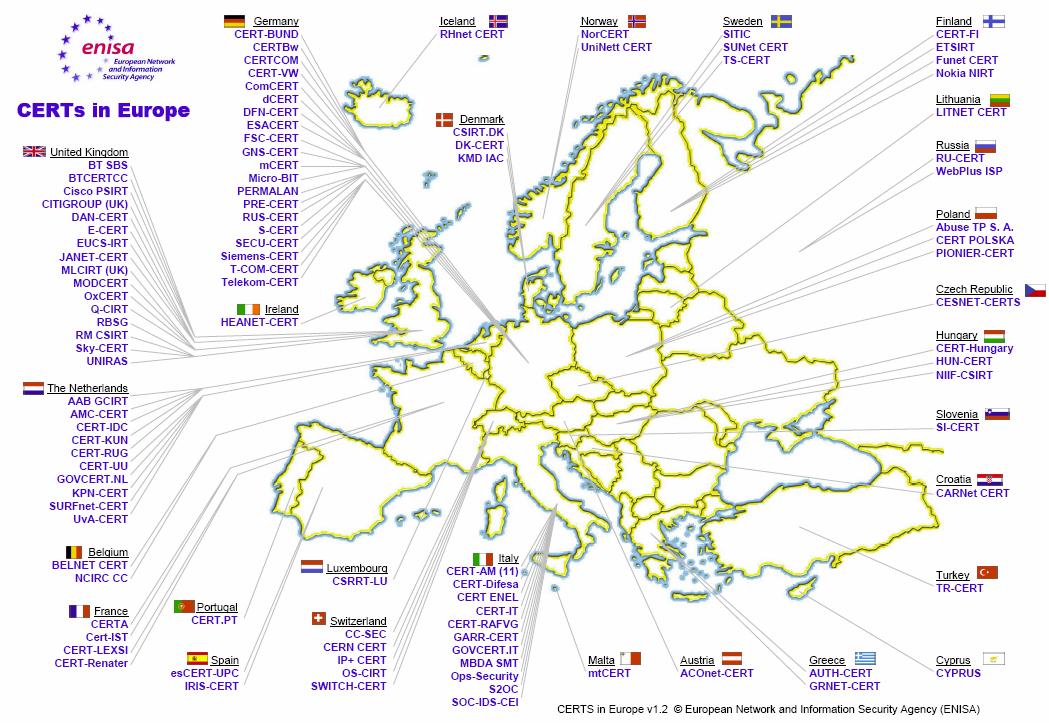
promotional stage, I feel the research reasonable points out the lack of a systematic technical approach, bureaucracy can also be an issue, but with so many CERTs in Europe there's potential for lots of developments I think. Established in 2004, ENISA is the current body overseeing and guiding the Community towards data protection practices -- slowly, but steadily gaining grounds.
"But the research also revealed that US companies are engaging in more security and control-oriented compliance activities than their European counterparts. As a result, US corporations scored higher in five of the eight areas of corporate privacy practice." - structured implementation on a technical level, that is people auditing networks and being accountable in case of not doing so, and privacy policies by default. A little something bringing more insight from the Safe Harbor framework :
"The United States uses a sectoral approach that relies on a mix of legislation, regulation, and self regulation. The European Union, however, relies on comprehensive legislation that, for example, requires creation of government data protection agencies, registration of data bases with those agencies, and in some instances prior approval before personal data processing may begin."
Of course there are differences and there should always be as they provoke constructive discussions, but among the many well-developed survey questions, some made me a quick impression :
"Is there a process for communicating the privacy policy to all customers and consumers?" Europe - 33% United States - 69%
"Is privacy training mandatory for key employees (those who handle, manage or control personal information)?" Europe - 22% United States - 62%
"Do you use technologies to prevent unauthorized or illegal movement or transfer of data or documents?" Europe - 17% Unites States - 45%
"Will the company notify individuals when their personal information is lost or stolen?" Europe 33% United States - 62%
Perimer based defenses naturally dominate as a perception of being secure, still, I feel that the growing infosec market and IT infrastructures in both the U.S and Europe would continue to fuel the growth of new technologies and also result in more informed decision makers -- at the bottom line it's always about a common goal and better information sharing.
"European companies are much more likely to have privacy practices that restrict or limit the sharing of customer or employees' sensitive personal information and are also more likely to provide employees with choice or consent on how information is used or shared," said David Bender, head of White & Case's Global Privacy practice." still at the "sharing sensitive information is bad"
promotional stage, I feel the research reasonable points out the lack of a systematic technical approach, bureaucracy can also be an issue, but with so many CERTs in Europe there's potential for lots of developments I think. Established in 2004, ENISA is the current body overseeing and guiding the Community towards data protection practices -- slowly, but steadily gaining grounds.
"But the research also revealed that US companies are engaging in more security and control-oriented compliance activities than their European counterparts. As a result, US corporations scored higher in five of the eight areas of corporate privacy practice." - structured implementation on a technical level, that is people auditing networks and being accountable in case of not doing so, and privacy policies by default. A little something bringing more insight from the Safe Harbor framework :
"The United States uses a sectoral approach that relies on a mix of legislation, regulation, and self regulation. The European Union, however, relies on comprehensive legislation that, for example, requires creation of government data protection agencies, registration of data bases with those agencies, and in some instances prior approval before personal data processing may begin."
Of course there are differences and there should always be as they provoke constructive discussions, but among the many well-developed survey questions, some made me a quick impression :
"Is there a process for communicating the privacy policy to all customers and consumers?" Europe - 33% United States - 69%
"Is privacy training mandatory for key employees (those who handle, manage or control personal information)?" Europe - 22% United States - 62%
"Do you use technologies to prevent unauthorized or illegal movement or transfer of data or documents?" Europe - 17% Unites States - 45%
"Will the company notify individuals when their personal information is lost or stolen?" Europe 33% United States - 62%
Perimer based defenses naturally dominate as a perception of being secure, still, I feel that the growing infosec market and IT infrastructures in both the U.S and Europe would continue to fuel the growth of new technologies and also result in more informed decision makers -- at the bottom line it's always about a common goal and better information sharing.
Independent Security Consultancy, Threat Intelligence Analysis (OSINT/Cyber Counter Intelligence) and Competitive Intelligence research on demand. Insightful, unbiased, and client-tailored assessments, neatly communicated in the form of interactive reports - because anticipating the emerging threatscape is what shapes the big picture at the end of the day. Approach me at dancho.danchev@hush.com
DIY Marketing Culture
Problem - big name advertising agencies, and self forgotten copywriters easily turn into an obstacle for a newly born startup, the way marketing researchers can easily base your entire service/product development efforts on a single survey's results. Generating content, thinking content is the king, trying to sense and understand your customers' needs or where the market is heading to for the sake of responding with profitable propositions, I think is a self-centered, in-the-box mode of thinking that would cease to exist with customers becoming more informed.
Solution - Don't get too "product-concept" centered, instead solve a problem profitably and retain their satisfaction for as long as possible. Let your customers dictate the rules, and perhaps even generate your entire marketing promotional efforts themselves -- literally. Did you know you could get yourself custom printed MM's? I recently found out I can, and I'm already expecting the packs.
Or how the successfully positioned as a secure alternative to IE, FireFox browser actually invested pennies in spreading the word about it? Moreover, a $5000 bounty can indeed promote creativity, given they are comfortable with the idea, and with the 280 user-generated ads generated at FireFox Flicks I think they did it again, no wait, their users did it. Take your time to go through the flicks, it's worthwhile.
Question the concepts, rethink them, and disrupt with whatever the outcome.
Solution - Don't get too "product-concept" centered, instead solve a problem profitably and retain their satisfaction for as long as possible. Let your customers dictate the rules, and perhaps even generate your entire marketing promotional efforts themselves -- literally. Did you know you could get yourself custom printed MM's? I recently found out I can, and I'm already expecting the packs.
Or how the successfully positioned as a secure alternative to IE, FireFox browser actually invested pennies in spreading the word about it? Moreover, a $5000 bounty can indeed promote creativity, given they are comfortable with the idea, and with the 280 user-generated ads generated at FireFox Flicks I think they did it again, no wait, their users did it. Take your time to go through the flicks, it's worthwhile.
Question the concepts, rethink them, and disrupt with whatever the outcome.
Independent Security Consultancy, Threat Intelligence Analysis (OSINT/Cyber Counter Intelligence) and Competitive Intelligence research on demand. Insightful, unbiased, and client-tailored assessments, neatly communicated in the form of interactive reports - because anticipating the emerging threatscape is what shapes the big picture at the end of the day. Approach me at dancho.danchev@hush.com
Wednesday, April 26, 2006
In between the lines of personal and sensitive information
In a previous post, "Give it back!" I mentioned the ongoing re-classification of declassified information and featured some publicly known sources for information on government secrecy. Today I came across to a news item relating to the topic in another way, "States Removing Personal Data from Official Web Sites", more from the article :
"At least six states use redaction software, which digitally erases information. It can be tailored to excise nine-digit entries such as SSNs. Chips Shore, circuit court clerk for Florida's Manatee County, removed SSNs and bank account numbers from 3 million public records on the Web site. Another 2.5 million court records were redacted before going online."
That's an interesting way to fight the problem from the top of it, namely personal data security breaches that never stop growing, but I wish they came up with the practice either by default years ago, or understand today's dynamics of the threat. Even if they start implementing this on a wide scale, it doesn't mean identity theft would stop occuring, or that phishing attacks wouldn't trick them into giving the complete details. Having implemented a process for securely storing, accessing and trasfering such sensitive customers' bank data, often results in complexities, but using "redaction software" when you can actually take advantage of a risk management solution, isn't the smartest move here -- yet again that's the effect of today's dynamics and ever-changing attack vectors. What's the point of putting so much efforts into sanitizing the data before going online with it, when an outsourcer, or an employee whose responsibilities include working with it will somehow expose it?
Wait, forgot the naive customer who's still taking all the phishing emails received "personally". Don't think SSNs and bank accounts "redaction", but insiders and storage/database security.
In respect to removing sensitive information from the Web, I feel the unability of successfully classifying information and balancing the accountability in front of society to a certain extend, generates contradictive responses. If you try to take down a document that has been somehow listed on the Internet or available in digital format, what you're doing is actually inspiring people to disseminate it, that include news agencies as well, so make sure it doesn't appear there at the first place. Recent cases such as these :
"DOD removes missile defense system report from Web site"
"NORAD orders Web deletion of transcript"
"Air Force One data removed from Web Site revealed details of security measures on president's jets"
"Leaks of Military Files Resume"
bring more insights on the issue. It is well known that the entire Chinese information warfare doctrine is backed up by the NCW visions of U.S's military -- they still have Sun Tzu's legacy though -- and that Al Qaeda's manuals actually quote U.S military's documents. If you know what exactly you're looking for, you will find it one way or another, just make sure information-sharing doesn't end up as an information leakage event.
Going beyond achieving the balance between usability, accountability, and secrecy, I also feel that disinformation and deception are reasonably taking place as well, given the reader is actually identified and consequently influenced.

"At least six states use redaction software, which digitally erases information. It can be tailored to excise nine-digit entries such as SSNs. Chips Shore, circuit court clerk for Florida's Manatee County, removed SSNs and bank account numbers from 3 million public records on the Web site. Another 2.5 million court records were redacted before going online."
That's an interesting way to fight the problem from the top of it, namely personal data security breaches that never stop growing, but I wish they came up with the practice either by default years ago, or understand today's dynamics of the threat. Even if they start implementing this on a wide scale, it doesn't mean identity theft would stop occuring, or that phishing attacks wouldn't trick them into giving the complete details. Having implemented a process for securely storing, accessing and trasfering such sensitive customers' bank data, often results in complexities, but using "redaction software" when you can actually take advantage of a risk management solution, isn't the smartest move here -- yet again that's the effect of today's dynamics and ever-changing attack vectors. What's the point of putting so much efforts into sanitizing the data before going online with it, when an outsourcer, or an employee whose responsibilities include working with it will somehow expose it?
Wait, forgot the naive customer who's still taking all the phishing emails received "personally". Don't think SSNs and bank accounts "redaction", but insiders and storage/database security.
In respect to removing sensitive information from the Web, I feel the unability of successfully classifying information and balancing the accountability in front of society to a certain extend, generates contradictive responses. If you try to take down a document that has been somehow listed on the Internet or available in digital format, what you're doing is actually inspiring people to disseminate it, that include news agencies as well, so make sure it doesn't appear there at the first place. Recent cases such as these :
"DOD removes missile defense system report from Web site"
"NORAD orders Web deletion of transcript"
"Air Force One data removed from Web Site revealed details of security measures on president's jets"
"Leaks of Military Files Resume"
bring more insights on the issue. It is well known that the entire Chinese information warfare doctrine is backed up by the NCW visions of U.S's military -- they still have Sun Tzu's legacy though -- and that Al Qaeda's manuals actually quote U.S military's documents. If you know what exactly you're looking for, you will find it one way or another, just make sure information-sharing doesn't end up as an information leakage event.
Going beyond achieving the balance between usability, accountability, and secrecy, I also feel that disinformation and deception are reasonably taking place as well, given the reader is actually identified and consequently influenced.
Independent Security Consultancy, Threat Intelligence Analysis (OSINT/Cyber Counter Intelligence) and Competitive Intelligence research on demand. Insightful, unbiased, and client-tailored assessments, neatly communicated in the form of interactive reports - because anticipating the emerging threatscape is what shapes the big picture at the end of the day. Approach me at dancho.danchev@hush.com
Tuesday, April 25, 2006
Wild Wild Underground
Where's the real underground these days, behind the shadows of the ShadowCrew, the revenge of the now, for-profit script kiddies, or in the slowly shaping real Mafia's online ambitions? Moreover, is all this activity going on behind the Dark Web, or the WWW itself? Go through this fresh overview, emphasizing on today's script kiddies, 0days as a commodity, malware and DDoS on demand on the WWW itself, and perhaps a little bit of vendors' tolerated FUD.
In a previous post, I mentioned on the existence of the International Exploits Shop, the Xshop, basically a web module where 0days, and service support in terms of videos, PHP-based configuration etc. are provided to anyone willing to get hold of a 0day/zero-day vulnerability -- scary stuff, yet truly realistic concept that's directly bypassing today's infomediaries that purchase vulnerabilities.
I must admit I didn't do homework well enough to figure out that the Hack Shop has been changing quite some places for the last two years and having offered many other vulnerabilities, going beyond what I came across to two months ago -- the Internet offers a much wider set of potential buyers than from the three informediaries for the time being. As a reader gave me a hint, in the future images would protect that type of pages from crawling activities, and it's interesting to note that previous versions of the shop were doing exactly the same, while the last one I got tipped about, was using text on its pages. What's also important to mention is that these are the public propositions, ones placed on the WWW, and not the Dark Web, the one behind closed doors. Last month, Sophos mentioned on the existence of a multi-exploit kit for an unbelievably cheap price :
"A Russian website is selling a spyware kit for $15. The website promises an easy-to-deploy spyware that only requires users to trick their victims into visiting a malicious website. The website even offers technical support. Carole Theriault, senior security consultant at Sophos, says such websites invite script kiddies and other unskilled would-be hackers into the world of cybercrime for profit."
Rather interesting, WebSense Security Labs looked further, came up with the screenshots from the site itself, cut the last screenshot you can clearly see here (Disable adobe acrobat web capture, Disable opera user, Kill frame, Location lock, Referrer lock) but again spread the rumour of multi-exploit kit for sale at $15, of course for entering the for-profit cyber crime business -- a little bit of FUD, sure, but the sellers aren't still that very desperate I think.
So, I decided to look even further and now can easily conclude -- it depends where you're buying it from, I mean even the official site sells it at a price that way too high for an average script kiddie to get hold of multi-exploits pack -- whether outdated or not can be questioned as well. So, the kit officially goes for $300 and, $25 for updates, I also came across it for $95, but I bet they are a lot of people looking for naive wannabe exploiters out there. As you can see on these screenshots, it has the ability to encrypt HTML pages, parts of the page, and take precautions for curious folks trying to figure out more about the page in question, and it makes me wonder on how well would malicious HTML detection would perform here, if it does?
What's the outcome -- script kiddies with attitude are basically compiling toolsets of old exploits and building all-in-one malware kits. As you can even see, they are lazy enough not to keep an eye on its detection status, a sign of "growing" business for sure, yet the "underground" seems to Ph34r going to the Opera , so take your note.
I recently came across to a great article "The Return of the Web Mob" you can find more details on the topic as well, such as :
"I saw one case where an undetectable Trojan was offered for sale and the buyers were debating whether it was worth the price. They were doing competitive testing to ensure it actually worked as advertised," said Jim Melnick, a member of Dunham's team."
"In November 2005, Mashevsky discovered an attempt to hijack a botnet. [The] network of infected computers changed hands three times in one day. Criminals have realized that it is much simpler to obtain already-infected resources than to maintain their own botnets, or to spend money on buying parts of botnets which are already in use," he said."
"Dunham, who frequently briefs upper levels of federal cyber-security authorities on emerging threats, said there have been cases in Russia where mafia-style physical torture has been used to recruit hackers. If you become a known hacker and you start to cut into their profits, they'll come to your house, take you away and beat you to a pulp until you back off or join them. There have been documented cases of this," Dunham said."
While doing a recent research across the Russian and the Chinese domain, I came to the conclusion that every local scene has it's own underground, and that those that go as publicly as some do at the bottom line, make the headlines. However, Chinese users being collectivists, are still at the heroic stage of cyber dissidents slowly turning into wannabe hackers, and they have a chain of command, so to speak, that I can argue is more powerful than thought to be "well organized" like the ones in Russia, being individualists. There are even marketing campaigns going on in the form of surveys, trying to measure the bargaining point for 0day vulnerabilities I guess. This one says :
How much would you be willing to pay for an exploit?
$100-300
$300-500
$500-1000
over $1000
we write our own exploits :D
I get them for free
and offers trying to even add value to the purchase by offering a SMS flooder for free if you purchase the exploit. I mean, if you start thinking logically, bypassing the current intermediaries and their moody programs compared to one-to-one communication model with a possible buyer -- the entire idea behind disintermediation is the method of choice. Have 0days turned into an uncontrolled commodity that has to be somehow, at least, coordinated?!
In my recent Future trends of malware research, I mentioned how open-source malware would inevitably dominate, and how the concept will put even more pressure on AV vendors to figure out how to protect from unknown malicious code -- proactively. What I came across to was, customer-centric malware propositions, special features increase or decrease the final price, botnet sources for free download/purchase if modifications are made, free advices coming with the purchase, on demand vulnerabilities, spamming or spam harvesting services on demand, price comparison for malware samples, rootkits-enabled pieces of malware indeed show an increase of growth, DDoS on demand services are usually proposed with 30 mins of service "demo".
Bot's sources are also annoyingly available at the click of a button, as I verified over 20 working links with archives averaging 75MB.
Popular ones :
urxbot, spybot, sdbot, rxbot, rbot, phatbot, litmus, gtbot, forbot, evilbot, darkirc, agobot, jbot, microbot, blueyebot, icebot, q8bot, happybot, htmlinfectbot, gsys, epicbot, darkbot, r00fuz, panicattack
Who's to blame? It's not Russia for sure, and if it was it would mostly have to do with enforcement of current laws, yet the global media tends to stereotype to efficiently meet deadlines, instead of figuring out what is going on at the bottom line. When the U.S sees attacks coming from Chinese networks, it doesn't mean it's Chinese hackers attacking the U.S, but could be that sick North Korean ones are trying to increase tensions by spoofing their identities. Moreover, as I've mentioned it is logical to conclude that there are "undergrounds" on a national level, for instance for the last couple of years there's been a steady growth of defacements and phishing attackers from Brazil, Turkey, and of course China, I rarely come across anything else but "mention Russia and get over it" attitude.
In respect to the Chinese "underground", according a report not to be disclosed, and so I'm not as it's fully loaded with impressive information, the Chinese underground back in 2002 used to aggressively attack U.S government's and military targets while drinking Coke from McDonald's themed Coke glass :) courtesy of the China Eagle Union themselves. Their actions in coordination with the Honker Union of China, for instance, played a crucial role in active hacktivism and continue playing it even today.
Like it or not, the average script kiddie, or can we say sophisticated Generation Y teenagers, are well too informed, and obviously sellers of malicious services such as DDoS and malware on demand, than it used to be years ago. I feel it's not their knowledge that's increasing, but the number of connected computers with security illiterate users aiming to put themselves in a "stealth mode" while online in order not to get hacked, or as a friend put it, running in root mode and hiding behind firewalls - ah, the end user.
You can digitally fingerprint a malicious code when you have it, that's normal, but what happens when you don't, can you fight the concepts themselves? Ken Dunham comments on "mafia-style physical torture" are the reflection of people naming their malware MyDoom and begging for botnets if you take your time to go through the quotes from Ancheta's case.
Don't ph34r the teenagers, ph34r their immaturity, and ongoing recruitment practices by the Mafia itself.
In a previous post, I mentioned on the existence of the International Exploits Shop, the Xshop, basically a web module where 0days, and service support in terms of videos, PHP-based configuration etc. are provided to anyone willing to get hold of a 0day/zero-day vulnerability -- scary stuff, yet truly realistic concept that's directly bypassing today's infomediaries that purchase vulnerabilities.
I must admit I didn't do homework well enough to figure out that the Hack Shop has been changing quite some places for the last two years and having offered many other vulnerabilities, going beyond what I came across to two months ago -- the Internet offers a much wider set of potential buyers than from the three informediaries for the time being. As a reader gave me a hint, in the future images would protect that type of pages from crawling activities, and it's interesting to note that previous versions of the shop were doing exactly the same, while the last one I got tipped about, was using text on its pages. What's also important to mention is that these are the public propositions, ones placed on the WWW, and not the Dark Web, the one behind closed doors. Last month, Sophos mentioned on the existence of a multi-exploit kit for an unbelievably cheap price :
"A Russian website is selling a spyware kit for $15. The website promises an easy-to-deploy spyware that only requires users to trick their victims into visiting a malicious website. The website even offers technical support. Carole Theriault, senior security consultant at Sophos, says such websites invite script kiddies and other unskilled would-be hackers into the world of cybercrime for profit."
Rather interesting, WebSense Security Labs looked further, came up with the screenshots from the site itself, cut the last screenshot you can clearly see here (Disable adobe acrobat web capture, Disable opera user, Kill frame, Location lock, Referrer lock) but again spread the rumour of multi-exploit kit for sale at $15, of course for entering the for-profit cyber crime business -- a little bit of FUD, sure, but the sellers aren't still that very desperate I think.
So, I decided to look even further and now can easily conclude -- it depends where you're buying it from, I mean even the official site sells it at a price that way too high for an average script kiddie to get hold of multi-exploits pack -- whether outdated or not can be questioned as well. So, the kit officially goes for $300 and, $25 for updates, I also came across it for $95, but I bet they are a lot of people looking for naive wannabe exploiters out there. As you can see on these screenshots, it has the ability to encrypt HTML pages, parts of the page, and take precautions for curious folks trying to figure out more about the page in question, and it makes me wonder on how well would malicious HTML detection would perform here, if it does?
What's the outcome -- script kiddies with attitude are basically compiling toolsets of old exploits and building all-in-one malware kits. As you can even see, they are lazy enough not to keep an eye on its detection status, a sign of "growing" business for sure, yet the "underground" seems to Ph34r going to the Opera , so take your note.
I recently came across to a great article "The Return of the Web Mob" you can find more details on the topic as well, such as :
"I saw one case where an undetectable Trojan was offered for sale and the buyers were debating whether it was worth the price. They were doing competitive testing to ensure it actually worked as advertised," said Jim Melnick, a member of Dunham's team."
"In November 2005, Mashevsky discovered an attempt to hijack a botnet. [The] network of infected computers changed hands three times in one day. Criminals have realized that it is much simpler to obtain already-infected resources than to maintain their own botnets, or to spend money on buying parts of botnets which are already in use," he said."
"Dunham, who frequently briefs upper levels of federal cyber-security authorities on emerging threats, said there have been cases in Russia where mafia-style physical torture has been used to recruit hackers. If you become a known hacker and you start to cut into their profits, they'll come to your house, take you away and beat you to a pulp until you back off or join them. There have been documented cases of this," Dunham said."
While doing a recent research across the Russian and the Chinese domain, I came to the conclusion that every local scene has it's own underground, and that those that go as publicly as some do at the bottom line, make the headlines. However, Chinese users being collectivists, are still at the heroic stage of cyber dissidents slowly turning into wannabe hackers, and they have a chain of command, so to speak, that I can argue is more powerful than thought to be "well organized" like the ones in Russia, being individualists. There are even marketing campaigns going on in the form of surveys, trying to measure the bargaining point for 0day vulnerabilities I guess. This one says :
How much would you be willing to pay for an exploit?
$100-300
$300-500
$500-1000
over $1000
we write our own exploits :D
I get them for free
and offers trying to even add value to the purchase by offering a SMS flooder for free if you purchase the exploit. I mean, if you start thinking logically, bypassing the current intermediaries and their moody programs compared to one-to-one communication model with a possible buyer -- the entire idea behind disintermediation is the method of choice. Have 0days turned into an uncontrolled commodity that has to be somehow, at least, coordinated?!
In my recent Future trends of malware research, I mentioned how open-source malware would inevitably dominate, and how the concept will put even more pressure on AV vendors to figure out how to protect from unknown malicious code -- proactively. What I came across to was, customer-centric malware propositions, special features increase or decrease the final price, botnet sources for free download/purchase if modifications are made, free advices coming with the purchase, on demand vulnerabilities, spamming or spam harvesting services on demand, price comparison for malware samples, rootkits-enabled pieces of malware indeed show an increase of growth, DDoS on demand services are usually proposed with 30 mins of service "demo".
Bot's sources are also annoyingly available at the click of a button, as I verified over 20 working links with archives averaging 75MB.
Popular ones :
urxbot, spybot, sdbot, rxbot, rbot, phatbot, litmus, gtbot, forbot, evilbot, darkirc, agobot, jbot, microbot, blueyebot, icebot, q8bot, happybot, htmlinfectbot, gsys, epicbot, darkbot, r00fuz, panicattack
Who's to blame? It's not Russia for sure, and if it was it would mostly have to do with enforcement of current laws, yet the global media tends to stereotype to efficiently meet deadlines, instead of figuring out what is going on at the bottom line. When the U.S sees attacks coming from Chinese networks, it doesn't mean it's Chinese hackers attacking the U.S, but could be that sick North Korean ones are trying to increase tensions by spoofing their identities. Moreover, as I've mentioned it is logical to conclude that there are "undergrounds" on a national level, for instance for the last couple of years there's been a steady growth of defacements and phishing attackers from Brazil, Turkey, and of course China, I rarely come across anything else but "mention Russia and get over it" attitude.
In respect to the Chinese "underground", according a report not to be disclosed, and so I'm not as it's fully loaded with impressive information, the Chinese underground back in 2002 used to aggressively attack U.S government's and military targets while drinking Coke from McDonald's themed Coke glass :) courtesy of the China Eagle Union themselves. Their actions in coordination with the Honker Union of China, for instance, played a crucial role in active hacktivism and continue playing it even today.
Like it or not, the average script kiddie, or can we say sophisticated Generation Y teenagers, are well too informed, and obviously sellers of malicious services such as DDoS and malware on demand, than it used to be years ago. I feel it's not their knowledge that's increasing, but the number of connected computers with security illiterate users aiming to put themselves in a "stealth mode" while online in order not to get hacked, or as a friend put it, running in root mode and hiding behind firewalls - ah, the end user.
You can digitally fingerprint a malicious code when you have it, that's normal, but what happens when you don't, can you fight the concepts themselves? Ken Dunham comments on "mafia-style physical torture" are the reflection of people naming their malware MyDoom and begging for botnets if you take your time to go through the quotes from Ancheta's case.
Don't ph34r the teenagers, ph34r their immaturity, and ongoing recruitment practices by the Mafia itself.
Independent Security Consultancy, Threat Intelligence Analysis (OSINT/Cyber Counter Intelligence) and Competitive Intelligence research on demand. Insightful, unbiased, and client-tailored assessments, neatly communicated in the form of interactive reports - because anticipating the emerging threatscape is what shapes the big picture at the end of the day. Approach me at dancho.danchev@hush.com
Monday, April 24, 2006
25 ways to distinguish yourself -- and be happy?
Totally out of the security world, yet very relevant inspirational tips for all readers feeling down, or looking for more sources of self-esteem. I've always believed that among the most important key factors for leadership is the ability to know yourself, and to understand the time dimensions of failure -- it's just a temporary event whenever it happens to occur. I also often debate on the pros and cons of corporate citizenship with friends, and try to emphasize on the mobility of today's workforce -- at least the way I see it. Is there any use of such an approach these days, and how should an enterprise go when attracting and retaining it's most valuable HR assets? Does the individual really count at the bottom line?
I think assets with attitude are the most valuable ones, given they never stop self-developing themselves. Going back to this very positive "manifesto" "You don't have to motivate me, just stop demotivating me" type of attitude is what you can greatly enjoy in these tips. Extremely well written key points, especially that "being part of the commodity crowd erodes your value", so true. These get updated all the time, so add them to your own unique ways of distinguishing yourself -- and being happy? :)
01. Care as if it's your own
02. Do your daily work with passion
03. Build strong relationships
04. Dream big!
05. Set the right expectations
06. Ask for help
07. Celebrate small victories
08. Set higher standards
09. Know your values
10. Pursue right memberships
11. Help people help themselves
12. Be a reader
13. Plan by outcomes
14. Think long-term
15. Embrace uncertainty with ease
16. Ask the right questions
17. Engage with a coach
18. Re relevant
19. Get back on your feet fast!
20. Lead a volunteer effort
21. Balance innovation and continuous improvement
22. Learn to sell -- your skills, not your soul or at least not on parts
23. Learn systems thinking
24. Walk away from free
25. Influence the influencers
I think assets with attitude are the most valuable ones, given they never stop self-developing themselves. Going back to this very positive "manifesto" "You don't have to motivate me, just stop demotivating me" type of attitude is what you can greatly enjoy in these tips. Extremely well written key points, especially that "being part of the commodity crowd erodes your value", so true. These get updated all the time, so add them to your own unique ways of distinguishing yourself -- and being happy? :)
01. Care as if it's your own
02. Do your daily work with passion
03. Build strong relationships
04. Dream big!
05. Set the right expectations
06. Ask for help
07. Celebrate small victories
08. Set higher standards
09. Know your values
10. Pursue right memberships
11. Help people help themselves
12. Be a reader
13. Plan by outcomes
14. Think long-term
15. Embrace uncertainty with ease
16. Ask the right questions
17. Engage with a coach
18. Re relevant
19. Get back on your feet fast!
20. Lead a volunteer effort
21. Balance innovation and continuous improvement
22. Learn to sell -- your skills, not your soul or at least not on parts
23. Learn systems thinking
24. Walk away from free
25. Influence the influencers
Independent Security Consultancy, Threat Intelligence Analysis (OSINT/Cyber Counter Intelligence) and Competitive Intelligence research on demand. Insightful, unbiased, and client-tailored assessments, neatly communicated in the form of interactive reports - because anticipating the emerging threatscape is what shapes the big picture at the end of the day. Approach me at dancho.danchev@hush.com
Why's that radar screen not blinking over there?
Two days ago, the Russian News & Information Agency - Novosti, reported on how "Russian bombers flew undetected across Arctic" more from the article :
"Russian military planes flew undetected through the U.S. zone of the Arctic Ocean to Canada during recent military exercises, a senior Air Force commander said Saturday. The commander of the country's long-range strategic bombers, Lieutenant General Igor Khvorov, said the U.S. Air Force is now investigating why its military was unable to detect the Russian bombers. They were unable to detect the planes either with radars or visually," he said."
SpaceWar.com, and several other sites/agencies also picked up the story, still its truthfulness, excluding the lack of coverage, can always be questioned, as "by the end of the year, two more Tu-160s will be commissioned for the long-range strategic bomber fleet, Khorov said." So, while I agree with him on the visual confirmation issue, such an achievement is hell of an incentive for commissioning more planes, isn't it? Moreover, should the what used to be, the world's largest radar - The Over-The-Horizon Backscatter Radar have been scrapped given Iran's (and not only) nuclear ambitions, or the ongoing space warfare doctrine would be the logical successor in here?
Let's for instance assume it actually happened, and take the reverse approach -- it actually happened in Russia too, back in 1987, and it wasn't a senior air force commander that did it, if he did, but 19 years old Mathias Rust who landed on the Red Square itself.
More details will follow for sure, so stay tuned, meanwhile take a look at Google Earth's Community spot link on Mathias's landing.
UPDATE
Nice article on the topic, and a great quote as well "Scanning containers full of sneakers for a 'nuke in a box' is not a really thoughtful thing."
Technorati tags:
Military, Radar, Bomber
"Russian military planes flew undetected through the U.S. zone of the Arctic Ocean to Canada during recent military exercises, a senior Air Force commander said Saturday. The commander of the country's long-range strategic bombers, Lieutenant General Igor Khvorov, said the U.S. Air Force is now investigating why its military was unable to detect the Russian bombers. They were unable to detect the planes either with radars or visually," he said."
SpaceWar.com, and several other sites/agencies also picked up the story, still its truthfulness, excluding the lack of coverage, can always be questioned, as "by the end of the year, two more Tu-160s will be commissioned for the long-range strategic bomber fleet, Khorov said." So, while I agree with him on the visual confirmation issue, such an achievement is hell of an incentive for commissioning more planes, isn't it? Moreover, should the what used to be, the world's largest radar - The Over-The-Horizon Backscatter Radar have been scrapped given Iran's (and not only) nuclear ambitions, or the ongoing space warfare doctrine would be the logical successor in here?
Let's for instance assume it actually happened, and take the reverse approach -- it actually happened in Russia too, back in 1987, and it wasn't a senior air force commander that did it, if he did, but 19 years old Mathias Rust who landed on the Red Square itself.
More details will follow for sure, so stay tuned, meanwhile take a look at Google Earth's Community spot link on Mathias's landing.
UPDATE
Nice article on the topic, and a great quote as well "Scanning containers full of sneakers for a 'nuke in a box' is not a really thoughtful thing."
Technorati tags:
Military, Radar, Bomber
Independent Security Consultancy, Threat Intelligence Analysis (OSINT/Cyber Counter Intelligence) and Competitive Intelligence research on demand. Insightful, unbiased, and client-tailored assessments, neatly communicated in the form of interactive reports - because anticipating the emerging threatscape is what shapes the big picture at the end of the day. Approach me at dancho.danchev@hush.com
Thursday, April 20, 2006
The anti virus industry's panacea - a virus recovery button
Just when I thought I've seen everything when it comes to malware, I was wrong as a PC vendor is trying to desperately position itself as one offering a feeling of security with the idea to strip its product and lower the customer price. The other day I came across to a fancy ad featuring Lenovo's ThinkVantage Virus Recovery Button, and promoting its usefulness even when there's no AV solution in place :
"Rescue and Recovery is a one button recovery and restore solution that includes a set of self recovery tools to help users diagnose, get help and recover from a virus or other system crashes quickly, even if the primary operating system will not boot and you are remote from your support team."
The video ad is indeed fascinating, and while their Embedded Security Subsystem 2.0 "locks your sensitive data behind hardware-based encryption", you'd better take advantage of their utilities options and try to avoid such a weak positioning in respect to malware. The Virus Recovery Button seems to be directly targeting the masses and totaly removing the complexity issue by introducing a button-based solution to malware -- dangerous as backups and their idea could have proven useful during the first generations of malware.
Anti virus signatures, response time, and various other proactive malware prevention approaches such as, IPS, buffer overflow protection are among today's most widely discussed approaches when dealing with malware, and of course, the principle of least privilege to user accounts. But why the anti virus button when it can be an anti-hacker one? I feel they'd better stick to their OEM agreements and find other ways to achieve competive advantage in pricing than providing a false sense of security.
In my recent "Malware - future trends" research I mentioned on the fully realistic scenario of having your security solution turn into a security problem itself. While this is nothing new, in this case we have a misjudged security proposition, as recovering to a pre-infection state doesn't necessariry mean confidentiality of sensitive personal/financial information wouldn't be breached by the time the user is aware of the infection, if it ever happens of course.
Moreover, Lenovo was recently under scrutiny as "The U.S.-China Economic Security Review Commission (USCC) argues that a foreign intelligence like that of the Communist Party of China (CPC) can use its power to get Lenovo to equip its machines with espionage devices. Lenovo has strongly declined that it is involved in any such activities", and while they eventually reached a consensus on using the machines on unclassified systems only, it doesn't mean they aren't exposed to a wide variety of threats going beyond China backdooring them, such as Zotob over border-screening systems at airports.
As a matter of fact, the rival PC/notebook propositions might still be owned by U.S companies, but are mostly assembled in China these days -- too much hype for nothing.
UPDATE - Sites that picked up the post
LinuxSecurity.com
MalwareHelp.org
Technorati tags:
Security, Malware, Anti-virus, Lenovo, Data Recovery

"Rescue and Recovery is a one button recovery and restore solution that includes a set of self recovery tools to help users diagnose, get help and recover from a virus or other system crashes quickly, even if the primary operating system will not boot and you are remote from your support team."
The video ad is indeed fascinating, and while their Embedded Security Subsystem 2.0 "locks your sensitive data behind hardware-based encryption", you'd better take advantage of their utilities options and try to avoid such a weak positioning in respect to malware. The Virus Recovery Button seems to be directly targeting the masses and totaly removing the complexity issue by introducing a button-based solution to malware -- dangerous as backups and their idea could have proven useful during the first generations of malware.
Anti virus signatures, response time, and various other proactive malware prevention approaches such as, IPS, buffer overflow protection are among today's most widely discussed approaches when dealing with malware, and of course, the principle of least privilege to user accounts. But why the anti virus button when it can be an anti-hacker one? I feel they'd better stick to their OEM agreements and find other ways to achieve competive advantage in pricing than providing a false sense of security.
In my recent "Malware - future trends" research I mentioned on the fully realistic scenario of having your security solution turn into a security problem itself. While this is nothing new, in this case we have a misjudged security proposition, as recovering to a pre-infection state doesn't necessariry mean confidentiality of sensitive personal/financial information wouldn't be breached by the time the user is aware of the infection, if it ever happens of course.
Moreover, Lenovo was recently under scrutiny as "The U.S.-China Economic Security Review Commission (USCC) argues that a foreign intelligence like that of the Communist Party of China (CPC) can use its power to get Lenovo to equip its machines with espionage devices. Lenovo has strongly declined that it is involved in any such activities", and while they eventually reached a consensus on using the machines on unclassified systems only, it doesn't mean they aren't exposed to a wide variety of threats going beyond China backdooring them, such as Zotob over border-screening systems at airports.
As a matter of fact, the rival PC/notebook propositions might still be owned by U.S companies, but are mostly assembled in China these days -- too much hype for nothing.
UPDATE - Sites that picked up the post
LinuxSecurity.com
MalwareHelp.org
Technorati tags:
Security, Malware, Anti-virus, Lenovo, Data Recovery
Independent Security Consultancy, Threat Intelligence Analysis (OSINT/Cyber Counter Intelligence) and Competitive Intelligence research on demand. Insightful, unbiased, and client-tailored assessments, neatly communicated in the form of interactive reports - because anticipating the emerging threatscape is what shapes the big picture at the end of the day. Approach me at dancho.danchev@hush.com
Digital forensics - efficient data acquisition devices
Digital forensics have always been a hot market segment, whereas the need for a reliable network based forensics model given main Internet's insecurities such as source address spoofing and the lack of commonly accepted security events reporting practices is constantly growing as well. Information acqusition, analysis and interpretation in the most reliable and efficient way is often among the desired outcome -- and of course figure out what has been happenning at a given historical moment in time or in real-time if applicable.
In a previous post related to "Detecting intruders and where to look for" I mentioned lots of resources regarding the topic, and tools to take advantage of, if in need. In respect to cell phones and various related privacy issues, excluding the physical forensic analysis that could be successfully performed, there's a growing discussing on whether a "suspect's" physical location should be revealed though a mobile-phone carrier -- segmented requests are the most efficient and socially-conscious ones I think.
Today I came across to "Logicube CellDEK" a portable handset data extraction kit :
"The portable CellDEK® acquires data from over 160 of the most popular cell phones and PDA's. Built to perform in the field (not just in the lab), investigators can immediately gain acces to vital information. This saves days of waiting for crucial data to come back from a crime lab. The CellDEK software automatically performs forensic extraction of the following data: Handset Time and Date, Serial Numbers (IMEI, IMSI), Dialed Calls, Received Calls, Phonebook (both handset and SIM), SMS (both handset and SIM), Deleted SMS from SIM, Calendar, Memos, To Do Lists, Pictures, Video, and Audio."
Nothing surprising as there are many other freeware applications/ways to do cell phone forensics (full list can be found at Sergio Hernando's blog), but what made me an impression was its usefulness by covering over 160 models, portability due to its size and capabilities, and that up to 40 adapters may be stored in the system’s built-in rack. Some challenges I see to today's forensic investigators are the sophistication of publicly available encryption/steganographic tools, the Internet acting as a online HDD opening opportunities for dead-drop places, and communications that went over covert channels.
On my wislist however, has always been the company's Forensic MD5, as it basically "swallows" data in a timely manner -- a bad toy in the hands of a insider going beyond average types of removable media, and in moments where minutes count. As a matter of fact, a forensic investigator's sophistication and expertise doesn't really count when the Mafia is still catching up on how to encrypt. Still, I'm convinced how some of his "operatives" are into far more sophisticated methods of communication than he is.
Check out some more resources, and case studies on the topic as well :
How to Become a Cyber-Investigator
SANS Reading Room - Forensics
Digital Forensics Tool Testing Images
Computer Forensics for Lawyers
Forensic Analysis of the Windows Registry
Forensic Computing from a Computer Security perspective
Guidelines on PDA Forensics
Forensic Examination of a RIM (BlackBerry) Wireless Device
WebMail Forensics
iPod Forensics
Digital Music Device Forensics
Forensics and the GSM mobile telephone system
List of Printers Which Do or Don't Print Tracking Dots
Metasploit Anti-forensics homepage
UPDATE - Sites that picked up the story
LinuxSecurity.com
Technorati tags:
Security, Forensics, cyber-crime, Mobile Phone
In a previous post related to "Detecting intruders and where to look for" I mentioned lots of resources regarding the topic, and tools to take advantage of, if in need. In respect to cell phones and various related privacy issues, excluding the physical forensic analysis that could be successfully performed, there's a growing discussing on whether a "suspect's" physical location should be revealed though a mobile-phone carrier -- segmented requests are the most efficient and socially-conscious ones I think.
Today I came across to "Logicube CellDEK" a portable handset data extraction kit :
"The portable CellDEK® acquires data from over 160 of the most popular cell phones and PDA's. Built to perform in the field (not just in the lab), investigators can immediately gain acces to vital information. This saves days of waiting for crucial data to come back from a crime lab. The CellDEK software automatically performs forensic extraction of the following data: Handset Time and Date, Serial Numbers (IMEI, IMSI), Dialed Calls, Received Calls, Phonebook (both handset and SIM), SMS (both handset and SIM), Deleted SMS from SIM, Calendar, Memos, To Do Lists, Pictures, Video, and Audio."
Nothing surprising as there are many other freeware applications/ways to do cell phone forensics (full list can be found at Sergio Hernando's blog), but what made me an impression was its usefulness by covering over 160 models, portability due to its size and capabilities, and that up to 40 adapters may be stored in the system’s built-in rack. Some challenges I see to today's forensic investigators are the sophistication of publicly available encryption/steganographic tools, the Internet acting as a online HDD opening opportunities for dead-drop places, and communications that went over covert channels.
On my wislist however, has always been the company's Forensic MD5, as it basically "swallows" data in a timely manner -- a bad toy in the hands of a insider going beyond average types of removable media, and in moments where minutes count. As a matter of fact, a forensic investigator's sophistication and expertise doesn't really count when the Mafia is still catching up on how to encrypt. Still, I'm convinced how some of his "operatives" are into far more sophisticated methods of communication than he is.
Check out some more resources, and case studies on the topic as well :
How to Become a Cyber-Investigator
SANS Reading Room - Forensics
Digital Forensics Tool Testing Images
Computer Forensics for Lawyers
Forensic Analysis of the Windows Registry
Forensic Computing from a Computer Security perspective
Guidelines on PDA Forensics
Forensic Examination of a RIM (BlackBerry) Wireless Device
WebMail Forensics
iPod Forensics
Digital Music Device Forensics
Forensics and the GSM mobile telephone system
List of Printers Which Do or Don't Print Tracking Dots
Metasploit Anti-forensics homepage
UPDATE - Sites that picked up the story
LinuxSecurity.com
Technorati tags:
Security, Forensics, cyber-crime, Mobile Phone
Independent Security Consultancy, Threat Intelligence Analysis (OSINT/Cyber Counter Intelligence) and Competitive Intelligence research on demand. Insightful, unbiased, and client-tailored assessments, neatly communicated in the form of interactive reports - because anticipating the emerging threatscape is what shapes the big picture at the end of the day. Approach me at dancho.danchev@hush.com
Tuesday, April 18, 2006
Spotting valuable investments in the information security market
Back in January I mentioned the possible acqusition of SiteAdvisor in my "Look who's gonna cash for evaluating the maliciousness of the Web?" post and it seems McAfee have realized the potential of this social-networking powered concept on a wide scale, and recently acquired SiteAdvisor -- this was meant to happen one way or another and with risk of being over-enthusiastic I feel I successfully spotted this one.
Next to SiteAdvisor's pros and cons that I commented on, I also provided a resourceful overview of some of the current malware crawling projects out there, to recently find out that WebRoot finally went public with the Phileas spyware crawler, and that Microsoft's Strider Crawler came up with the Typo-Control project -- great idea as a matter of fact. What are some of the current/future trends in the information security industry? Are the recent flood of acquisitions the result of cheaper hardware and the utilization of open-source software, thus cutting costs to the minimum while the idea still makes it to the market?
Have both, entry and exit barriers totally vanished so that anyone could get aspired of becoming a vendor without the brand at the first place? Excluding the big picture, it is amazing how uninformed both, end and corporate users are, yet another lack of incentive for security vendors to reach another level of solutions -- if it ain't broken, don't improve it.
Moreover, what would the effect be of achieving the utopian 100% security on both, the market and the world's economy? On one hand we have "the worst year" of cybercrime, whereas spending and salaries are booming, and they should be as the not knowing how much security is enough, but trying to achieve the most secured state is a driving factor for decades to come.
The bottom line is, the more insecurities, the more security spending, the higher the spending, the higher the growth, and with increasing purchasing power, corporate R&D, and government initiatives you have a fully working economic model -- going to war, or seeing terrorists everywhere is today's driving force for military/intelligence spending compared to the "Reds are everywhere" propaganda from both camps of course, back in the Cold War period. Fighting with inspired bureaucrats is always an issue as well.
The Ansoff's Product/Market Matrix often acts as the de-facto standard for developing business opportunities, that is, of course, if you're not lead by a visionary aim, promote an internal "everyday startup" atmosphere to stimulate creativity, or benchmark against competitors. On the majority of occassions a security vendor is looking for ways to diversify its solutions' portfolio, thus taking advantage of re-introduced product life cycles and new sources for revenues.
While there should be nothing wrong with that given a vendor is actually providing a reliable solution and support with it, I often argue on how marketable propositions centric business model is not good for the long-term competitiveness of the company in question.
It's the judgement and competitors myopia that I'm talking about. In respect to the current information security market trends, or let's pick up the anti virus solutions segment, that means loosing sight of the big picture with the help of the mainstream media -- cross refferenced malware names, "yet another" malware in the wild, or supposed to be Russian hacker selling his soul for E-gold(cut the stereotypes here and go through the majority of recent statistics to see where all that phishing, spam and malware is coming from), is a common weakness of a possible decision-maker looking for acquisitions. Focusing on both, current trends, and current competitions is the myopia that would prevent you from sensing the emerging ones, the ones that would improve your competitiveness at any time of execution of course.
The way we have been witnessing an overal shift towards a services based world economy in comparisson to a goods based one, in the informaiton security market services or solutions will inevitably profiliate in the upcoming future. When was the last time you heart someone saying "I don't need an anti-virus scanner, but an anti-virus solution, what's yours and how is it differentiated from the others I'm aware of"? Un-informed decisions, quick and cheap way to get away with the "security problem", or being totally brainwashed by a vendor's salesforce would result in enormous long-term TCO(total cost of ownership) problems, given someone actually figures a way to make the connection in here.
Some time ago, I came across a great article at CSOOnline.com "2 Vendor Megatrends and What They Mean to You" giving insight on two trends, namely, consolidation of security providers and convergence -- the interception between IT and physical security. And while it's great in respect to covering these current trends, I feel the article hasn't mentioned the 3rd one - Diversification. An excerpt :
"One trend is consolidation. "We're seeing the bigger players buying out many of the smaller companies. And I think the largest of the security firms are looking to provide a full range of enterprise services," says C. Warren Axelrod, director of global information security at Pershing, a Bank of New York Securities Group company. "The larger firms, like Internet Security Systems, Symantec and Computer Associates, are buying in many areas to complement what they have. They're basically vying for control of the security space." Axelrod is dead on, and consolidation is just as rampant among physical security vendors as it is in the IT world."
I feel consolidation is happening mainly because different market segments are constantly getting crowded and mainly because it's very, very hard to get a name in the information security market these days, so instead of run for your own IPO, compete against market players whose minor modification may ruin your entire idea, you'd better get acquired one way or another. @stake is an example of how skilled HR runs away from the acquirer, at least for me counting the HR as the driving force besides the brand.
More from the article :
"The second trend is convergence—the confluence of IT and physical security systems and vendors—which, in some sense, is another form of consolidation, only it's happening across the line that historically divided those two worlds."
Tangible security is often favored by investors as it targets the masses, and the most visible example besides perimeter based defenses are the hardware appliances themselves. These days, there isn't a single anti virus, anti spam or anti spyware solution provider without a hardware appliance, but what's to note is how their OEM agreements are still working and fully applicable, it's all about greed, or let's avoid the cliche and say profit maximization -- whatever the market requires the vendors deliver!
Very in-depth article, while I can argue that vendors are so desperate to "consolidate bids" on a national level, as they usually try to get as big part of the pie as possible. What's else to note is that the higher the market transparency, the more competitive the environment, thus greater competition which is always useful for the final user. In respect to heterogenity and homogenity of security solutions, and all-in-one propositions, the trade-offs are plain simple, cut total TCO by using a single vendor, get your entire infrastructure breached into by an attacker that would sooner or later find a vulnerability in it -- find the balance and try to avoid the myth that complexity results in insecurities, as it's a unique situation every time.
What we're witnessing acquisition-to-solution turn-around periods of several months in response to an emerging market - the IM one, mobile anti-virus scanners seem to be the "next big thing", whereas it would take quite some time for this segment to develop, still you'd better be among the first to respond to the interest and the fact that there are more mobile phones capable of getting infected with a virus, than PCs out there -- 3G, 4G, mobile banking would fuel the growth even more, and these are just among the few issues to keep in mind. In a previous post, I also mentioned on a creative use of security intelligence information in Sophos's Zombie Alert service, and a product-line extensions, namely McAfee's bot killing system. What no one pictured would happen is emerging these days - vulnerabilities turning into IP and the overal commercialization of the security vulnerabilities market, and getting paid for getting hacked is a growing trend as well -- much more's to come for sure.
The secrets to successful acquisitions?
- retain the HR that came with it, and better put something on the table at the first place
- don't try to cannibalize the culture there, Flickr is the perfect example out of the security market
- go beyond the mainstream media sources, and PR releases, use open source competitive intelligence tools in order not to miss an opportunity
- attend as much cons as possible to keep track of who's who and where's the industry heading to
- cost-effectively keep in touch with researchers, and an eye on their blogs, you never know who would be your early warning system for business development ideas
Try to stay on the top of security, not in line with it.
Technorati tags:
Security, Information Security, SiteAdvisor, McAfee, Investing, Investment, Market Trends, Economics
Next to SiteAdvisor's pros and cons that I commented on, I also provided a resourceful overview of some of the current malware crawling projects out there, to recently find out that WebRoot finally went public with the Phileas spyware crawler, and that Microsoft's Strider Crawler came up with the Typo-Control project -- great idea as a matter of fact. What are some of the current/future trends in the information security industry? Are the recent flood of acquisitions the result of cheaper hardware and the utilization of open-source software, thus cutting costs to the minimum while the idea still makes it to the market?
Have both, entry and exit barriers totally vanished so that anyone could get aspired of becoming a vendor without the brand at the first place? Excluding the big picture, it is amazing how uninformed both, end and corporate users are, yet another lack of incentive for security vendors to reach another level of solutions -- if it ain't broken, don't improve it.
Moreover, what would the effect be of achieving the utopian 100% security on both, the market and the world's economy? On one hand we have "the worst year" of cybercrime, whereas spending and salaries are booming, and they should be as the not knowing how much security is enough, but trying to achieve the most secured state is a driving factor for decades to come.
The bottom line is, the more insecurities, the more security spending, the higher the spending, the higher the growth, and with increasing purchasing power, corporate R&D, and government initiatives you have a fully working economic model -- going to war, or seeing terrorists everywhere is today's driving force for military/intelligence spending compared to the "Reds are everywhere" propaganda from both camps of course, back in the Cold War period. Fighting with inspired bureaucrats is always an issue as well.
The Ansoff's Product/Market Matrix often acts as the de-facto standard for developing business opportunities, that is, of course, if you're not lead by a visionary aim, promote an internal "everyday startup" atmosphere to stimulate creativity, or benchmark against competitors. On the majority of occassions a security vendor is looking for ways to diversify its solutions' portfolio, thus taking advantage of re-introduced product life cycles and new sources for revenues.
While there should be nothing wrong with that given a vendor is actually providing a reliable solution and support with it, I often argue on how marketable propositions centric business model is not good for the long-term competitiveness of the company in question.
It's the judgement and competitors myopia that I'm talking about. In respect to the current information security market trends, or let's pick up the anti virus solutions segment, that means loosing sight of the big picture with the help of the mainstream media -- cross refferenced malware names, "yet another" malware in the wild, or supposed to be Russian hacker selling his soul for E-gold(cut the stereotypes here and go through the majority of recent statistics to see where all that phishing, spam and malware is coming from), is a common weakness of a possible decision-maker looking for acquisitions. Focusing on both, current trends, and current competitions is the myopia that would prevent you from sensing the emerging ones, the ones that would improve your competitiveness at any time of execution of course.
The way we have been witnessing an overal shift towards a services based world economy in comparisson to a goods based one, in the informaiton security market services or solutions will inevitably profiliate in the upcoming future. When was the last time you heart someone saying "I don't need an anti-virus scanner, but an anti-virus solution, what's yours and how is it differentiated from the others I'm aware of"? Un-informed decisions, quick and cheap way to get away with the "security problem", or being totally brainwashed by a vendor's salesforce would result in enormous long-term TCO(total cost of ownership) problems, given someone actually figures a way to make the connection in here.
Some time ago, I came across a great article at CSOOnline.com "2 Vendor Megatrends and What They Mean to You" giving insight on two trends, namely, consolidation of security providers and convergence -- the interception between IT and physical security. And while it's great in respect to covering these current trends, I feel the article hasn't mentioned the 3rd one - Diversification. An excerpt :
"One trend is consolidation. "We're seeing the bigger players buying out many of the smaller companies. And I think the largest of the security firms are looking to provide a full range of enterprise services," says C. Warren Axelrod, director of global information security at Pershing, a Bank of New York Securities Group company. "The larger firms, like Internet Security Systems, Symantec and Computer Associates, are buying in many areas to complement what they have. They're basically vying for control of the security space." Axelrod is dead on, and consolidation is just as rampant among physical security vendors as it is in the IT world."
I feel consolidation is happening mainly because different market segments are constantly getting crowded and mainly because it's very, very hard to get a name in the information security market these days, so instead of run for your own IPO, compete against market players whose minor modification may ruin your entire idea, you'd better get acquired one way or another. @stake is an example of how skilled HR runs away from the acquirer, at least for me counting the HR as the driving force besides the brand.
More from the article :
"The second trend is convergence—the confluence of IT and physical security systems and vendors—which, in some sense, is another form of consolidation, only it's happening across the line that historically divided those two worlds."
Tangible security is often favored by investors as it targets the masses, and the most visible example besides perimeter based defenses are the hardware appliances themselves. These days, there isn't a single anti virus, anti spam or anti spyware solution provider without a hardware appliance, but what's to note is how their OEM agreements are still working and fully applicable, it's all about greed, or let's avoid the cliche and say profit maximization -- whatever the market requires the vendors deliver!
Very in-depth article, while I can argue that vendors are so desperate to "consolidate bids" on a national level, as they usually try to get as big part of the pie as possible. What's else to note is that the higher the market transparency, the more competitive the environment, thus greater competition which is always useful for the final user. In respect to heterogenity and homogenity of security solutions, and all-in-one propositions, the trade-offs are plain simple, cut total TCO by using a single vendor, get your entire infrastructure breached into by an attacker that would sooner or later find a vulnerability in it -- find the balance and try to avoid the myth that complexity results in insecurities, as it's a unique situation every time.
What we're witnessing acquisition-to-solution turn-around periods of several months in response to an emerging market - the IM one, mobile anti-virus scanners seem to be the "next big thing", whereas it would take quite some time for this segment to develop, still you'd better be among the first to respond to the interest and the fact that there are more mobile phones capable of getting infected with a virus, than PCs out there -- 3G, 4G, mobile banking would fuel the growth even more, and these are just among the few issues to keep in mind. In a previous post, I also mentioned on a creative use of security intelligence information in Sophos's Zombie Alert service, and a product-line extensions, namely McAfee's bot killing system. What no one pictured would happen is emerging these days - vulnerabilities turning into IP and the overal commercialization of the security vulnerabilities market, and getting paid for getting hacked is a growing trend as well -- much more's to come for sure.

The secrets to successful acquisitions?
- retain the HR that came with it, and better put something on the table at the first place
- don't try to cannibalize the culture there, Flickr is the perfect example out of the security market
- go beyond the mainstream media sources, and PR releases, use open source competitive intelligence tools in order not to miss an opportunity
- attend as much cons as possible to keep track of who's who and where's the industry heading to
- cost-effectively keep in touch with researchers, and an eye on their blogs, you never know who would be your early warning system for business development ideas
Try to stay on the top of security, not in line with it.
Technorati tags:
Security, Information Security, SiteAdvisor, McAfee, Investing, Investment, Market Trends, Economics
Independent Security Consultancy, Threat Intelligence Analysis (OSINT/Cyber Counter Intelligence) and Competitive Intelligence research on demand. Insightful, unbiased, and client-tailored assessments, neatly communicated in the form of interactive reports - because anticipating the emerging threatscape is what shapes the big picture at the end of the day. Approach me at dancho.danchev@hush.com
Would somebody please buy this Titan 1 ICBM Missile Base?
I feel that no matter how much you try to bypass the intermediary, it would continue to remain the place for anything auction - 0day vulnerabilities, Enigma encryption machines, and now a Titan 1 ICBM Missile Base, is for sale at Ebay for the N time. Bari Hotchkiss listed the characteristics of the underground fortress as :
- Hardened buildings built to withstand One megaton nuclear blast within three thousand feet
- Wall thicknesses up to fourteen feet
- Thousands of feet of connecting tunnels
- Paved roads. Security fencing
Trying to auction it again, as he seems to own the facility, it beats The Bunker in respect to a wide range of physical/electronic attack based security possibilities, and has the potential to turn into the perfect data center with enough space for war rooms on every level.
As Gene Spafford once put it :
"The only truly secure system is one that is powered off, cast in a block of concrete and sealed in a lead-lined room with armed guards - and even then I have my doubts."
and you would probably need a network connection of some kind to make use if it -- that means insecurities posed out of open and hard to control external networks.
I've once mentioned how nuclear weapons aren't the type of central military thinking problem the way they used to be during the Cold War's arms race, as there are many more emerging threats to consider, such as EMP, and Space warfare, but that's hell of an offer for a post-ColdWar underground complex, isn't it?
Some resources worth taking a look at :
19 Ways to Build Physical Security into a Data Center
Data Center : Securing Server Farms - Solution Reference Network Design
Data Center Security Associate Certificate Recommended Reading
Technorati tags:
Security, ICBM, Data Center, Missile Base
- Hardened buildings built to withstand One megaton nuclear blast within three thousand feet
- Wall thicknesses up to fourteen feet
- Thousands of feet of connecting tunnels
- Paved roads. Security fencing
Trying to auction it again, as he seems to own the facility, it beats The Bunker in respect to a wide range of physical/electronic attack based security possibilities, and has the potential to turn into the perfect data center with enough space for war rooms on every level.
As Gene Spafford once put it :
"The only truly secure system is one that is powered off, cast in a block of concrete and sealed in a lead-lined room with armed guards - and even then I have my doubts."
and you would probably need a network connection of some kind to make use if it -- that means insecurities posed out of open and hard to control external networks.
I've once mentioned how nuclear weapons aren't the type of central military thinking problem the way they used to be during the Cold War's arms race, as there are many more emerging threats to consider, such as EMP, and Space warfare, but that's hell of an offer for a post-ColdWar underground complex, isn't it?
Some resources worth taking a look at :
19 Ways to Build Physical Security into a Data Center
Data Center : Securing Server Farms - Solution Reference Network Design
Data Center Security Associate Certificate Recommended Reading
Technorati tags:
Security, ICBM, Data Center, Missile Base
Independent Security Consultancy, Threat Intelligence Analysis (OSINT/Cyber Counter Intelligence) and Competitive Intelligence research on demand. Insightful, unbiased, and client-tailored assessments, neatly communicated in the form of interactive reports - because anticipating the emerging threatscape is what shapes the big picture at the end of the day. Approach me at dancho.danchev@hush.com
Friday, April 14, 2006
Fighting Internet's email junk through licensing
Just came across this story at Slashdot, interesting approach :
"China has introduced regulations that make it illegal to run an email server without a licence. The new rules, which came into force two weeks ago, mean that most companies running their own email servers in China are now breaking the law. The new email licensing clause is just a small part of a new anti-spam law formulated by China's Ministry of Information Industry (MII)."
While the commitment is a remarkable event given China's booming Internet population -- among the main reasons Google had to somehow enter China's search market and take market share from Baidu.com -- you don't need a mail server to disseminate spam and phishing attacks like it used to be in the old days. You need botnets, namely, going through CME's List, you would see how the majority of today's malware is loaded with build-in SMTP engine, even offline/in-transit/web email harvesting modules.
You can often find China on the top of every recently released spam/phishing/botnet trends summary, which doesn't mean Chinese Internet users are insecure -- just unaware. What you can do is educate the masses to secure the entire population, and stimulate the growth of the local security market that everyone is so desperately trying to tap into.
Moreover, I doubt you can regulate the type of Internet users still trying to freely access information, again with the wrong attitude in respect to security :
"..prohibiting use of email to discuss certain vaguely defined subjects related to 'network security' and ' information security', and also reiterate that emails which contain content contrary to existing laws must not be copied or forwarded. Wide-ranging laws of this nature have been used against political and religous dissenters in the past."
It's like legally justifying the country's censorship practices through introducing the law, whereas I feel "network security" and "information security" attacks outside the homeland get favored, compared to internal ones, don't you?
Forbidden fruits turn into dangerous desires on the majority of occasions, and you just can't control that, what's left to censor it.
Technorati tags:
Security, Malware, Spam, Phishing, China
"China has introduced regulations that make it illegal to run an email server without a licence. The new rules, which came into force two weeks ago, mean that most companies running their own email servers in China are now breaking the law. The new email licensing clause is just a small part of a new anti-spam law formulated by China's Ministry of Information Industry (MII)."
While the commitment is a remarkable event given China's booming Internet population -- among the main reasons Google had to somehow enter China's search market and take market share from Baidu.com -- you don't need a mail server to disseminate spam and phishing attacks like it used to be in the old days. You need botnets, namely, going through CME's List, you would see how the majority of today's malware is loaded with build-in SMTP engine, even offline/in-transit/web email harvesting modules.
You can often find China on the top of every recently released spam/phishing/botnet trends summary, which doesn't mean Chinese Internet users are insecure -- just unaware. What you can do is educate the masses to secure the entire population, and stimulate the growth of the local security market that everyone is so desperately trying to tap into.
Moreover, I doubt you can regulate the type of Internet users still trying to freely access information, again with the wrong attitude in respect to security :
"..prohibiting use of email to discuss certain vaguely defined subjects related to 'network security' and ' information security', and also reiterate that emails which contain content contrary to existing laws must not be copied or forwarded. Wide-ranging laws of this nature have been used against political and religous dissenters in the past."
It's like legally justifying the country's censorship practices through introducing the law, whereas I feel "network security" and "information security" attacks outside the homeland get favored, compared to internal ones, don't you?
Forbidden fruits turn into dangerous desires on the majority of occasions, and you just can't control that, what's left to censor it.
Technorati tags:
Security, Malware, Spam, Phishing, China
Independent Security Consultancy, Threat Intelligence Analysis (OSINT/Cyber Counter Intelligence) and Competitive Intelligence research on demand. Insightful, unbiased, and client-tailored assessments, neatly communicated in the form of interactive reports - because anticipating the emerging threatscape is what shapes the big picture at the end of the day. Approach me at dancho.danchev@hush.com
Subscribe to:
Comments (Atom)