From the unpragmatic department :
"Colarik proposes "a league of cyber communities." The world's 20 largest economies would sign a treaty vowing to manage their own country's cyber activities. Member states would then deny traffic to any nation that refuses to crack down on cyber terrorists."
No, he really means it, totally forgetting on how a huge percentage of terrorist related web sites are hosted in the U.S. Here's the latest example. It gets even more shortsighted :
"Al-Qaeda also publishes a monthly magazine devoted to cyber-terrorism techniques."
If installing a VMware and PGP Whole Disk Encryption is a cyber-terrorism technique, we're all cyber terrorists without the radical mode of thinking and the Quran on the bookshelf.
Wednesday, January 10, 2007
Preventing a Massive al-Qaeda Cyber Attack

 Independent Security Consultancy, Threat Intelligence Analysis (OSINT/Cyber Counter Intelligence) and Competitive Intelligence research on demand. Insightful, unbiased, and client-tailored assessments, neatly communicated in the form of interactive reports - because anticipating the emerging threatscape is what shapes the big picture at the end of the day. Approach me at dancho.danchev@hush.com
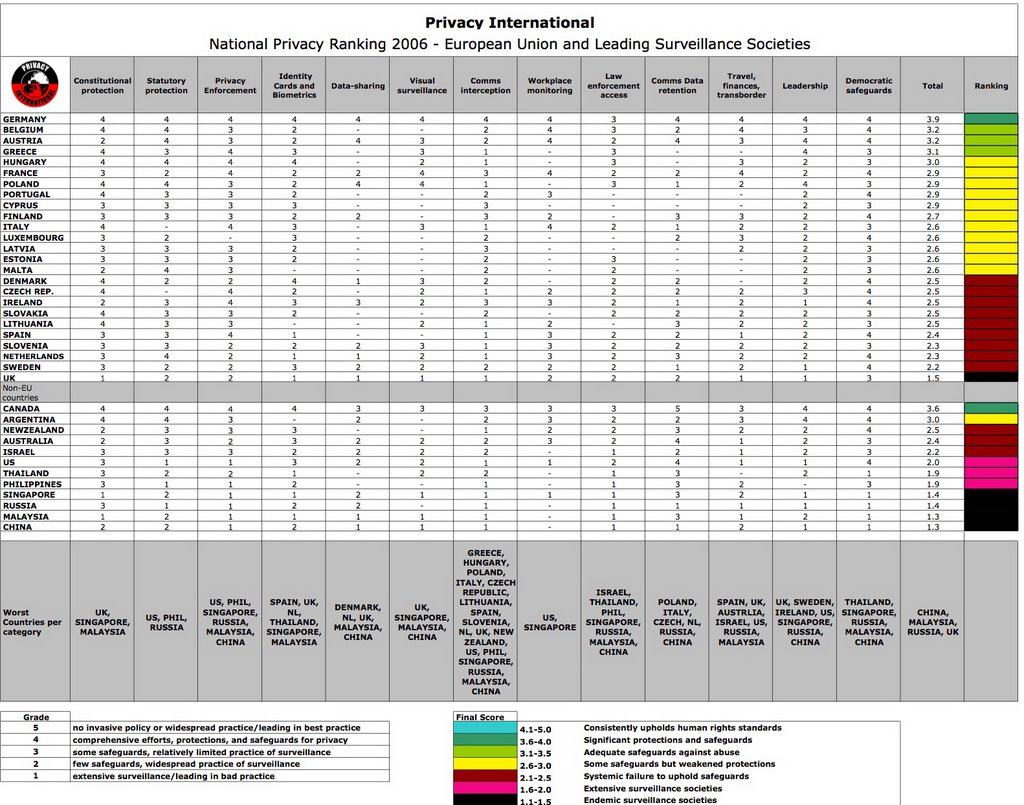
Eyes in London's Sky - Surveillance Poster
Alcohol's bad, drugs are bad, surveillance is good for protecting your from the insecurities we made you become paranoid of, and so are head-mounted surveillance cams equipped police officers. Sure, but consider the social implications too. London may be one of the most important business centers in Europe -- next to Frankfurt and Rotterdam -- but I'm so not looking forward to living in what's turning into a synonym for 1984.

 Independent Security Consultancy, Threat Intelligence Analysis (OSINT/Cyber Counter Intelligence) and Competitive Intelligence research on demand. Insightful, unbiased, and client-tailored assessments, neatly communicated in the form of interactive reports - because anticipating the emerging threatscape is what shapes the big picture at the end of the day. Approach me at dancho.danchev@hush.com
Tuesday, January 09, 2007
Still Living in the Perimeter Defense World
Whereas you'd better break out of the budget-allocation myopia and consider prioritizing your security investments, decreased spending on information security in certain regions means good old-fashioned malware and spam floods for the rest of regions doing it :
"Fewer small- and medium-sized enterprises (SMEs) in Taiwan will increase their spending on information security this year compared with last year, according to a report released Thursday by the Institute for Information Industry's Market Intelligence Center (MIC). The report said that only 12.9 percent of SMEs will increase their information security spending in 2007, compared with 16.2 percent in 2006."
Perimeter defense and host security is like the ABC of security, but since viruses and network attacks are "taken care of" all seems fine -- you wish.
"While more than 90 percent of SMEs have installed anti-virus software and firewall devices, only 11 percent have installed unified threat management products, according to Wang."
And while your organization is multitasking on how to budget with the anyway scarce resources due to legal requirements to do so, or visionary leaders realizing the soft and hard cash losses if you dare to pretend your organization wouldn't get breached into, regions around the world don't have the incentives to do so. If you bring too many people to a party someone always takes a *** in the beer, or so they say. Know when to spend, how much, on what, and is the timing for your investment the right one given the environmental factors of your company. A small size business doesn't really need a honeyfarm unless of course the admin is putting a personal effort in the job.
"Fewer small- and medium-sized enterprises (SMEs) in Taiwan will increase their spending on information security this year compared with last year, according to a report released Thursday by the Institute for Information Industry's Market Intelligence Center (MIC). The report said that only 12.9 percent of SMEs will increase their information security spending in 2007, compared with 16.2 percent in 2006."
Perimeter defense and host security is like the ABC of security, but since viruses and network attacks are "taken care of" all seems fine -- you wish.
"While more than 90 percent of SMEs have installed anti-virus software and firewall devices, only 11 percent have installed unified threat management products, according to Wang."
And while your organization is multitasking on how to budget with the anyway scarce resources due to legal requirements to do so, or visionary leaders realizing the soft and hard cash losses if you dare to pretend your organization wouldn't get breached into, regions around the world don't have the incentives to do so. If you bring too many people to a party someone always takes a *** in the beer, or so they say. Know when to spend, how much, on what, and is the timing for your investment the right one given the environmental factors of your company. A small size business doesn't really need a honeyfarm unless of course the admin is putting a personal effort in the job.
Independent Security Consultancy, Threat Intelligence Analysis (OSINT/Cyber Counter Intelligence) and Competitive Intelligence research on demand. Insightful, unbiased, and client-tailored assessments, neatly communicated in the form of interactive reports - because anticipating the emerging threatscape is what shapes the big picture at the end of the day. Approach me at dancho.danchev@hush.com
Data Mining Credit Cards for Child Porn Purchases
 22 million customers had the privacy of their credit card purchasing histories breached for the sake of coming up with 322 suspects while looking for transactions to a single child porn web site - ingenious, absolutely ingenious :
"In the case under investigation, police were aware of a child pornography Web site outside of Germany that was attracting users inside the country. And they asked the credit-card companies to conduct a database search narrowed to three criteria: a specific amount of money, a specific time period and a specific receiver account."
I don't want to ruin the effect of the effort here, but why do you still believe child porn is located on the WWW, in the http:// field you're so obsessed with? Is the WWW the only content distribution vector for multimedia files you're aware of? Try the Internet Relay Chat, the concept of Fserve to be precise. Having found the low lifes who buy child porn over the Web is like picturing a pothead as the über-dealer to meet your quotas, namely, efforts like these have absolutely no effect on the overal state of child pornography online. It's the wrong way to fight the war. Put the emphasis on fighting the very production process -- trafficking of children -- not the distribution one.
Independent Security Consultancy, Threat Intelligence Analysis (OSINT/Cyber Counter Intelligence) and Competitive Intelligence research on demand. Insightful, unbiased, and client-tailored assessments, neatly communicated in the form of interactive reports - because anticipating the emerging threatscape is what shapes the big picture at the end of the day. Approach me at dancho.danchev@hush.com
Subscribe to:
Posts (Atom)