Ever wondered what's the font size of a terrorist forum posting? These guys are really deep into using AI for gathering intelligence on various Cyberterrorism threats, and as you can see they neatly visualize their findings. "Applying Authorship Analysis to Extremist-Group Web Forum Messages" by Ahmed Abbasi and Hsinchun Chen, University of Arizona seem to have found a way, or at least patters of ongoing terrorist communication, and of course propaganda online. What they did was :
"To explore these problems, we modified an existing framework for analyzing online authorship and applied it to Arabic and English Web forum messagesassociated with known extremist groups. We developed a special multilingual model—the set of algorithms and related features—to identify Arabic messages, gearing this model toward the language’s unique characteristics. Furthermore, we incorporated a complex message extraction component to allow the use of a more comprehensive set of features tailored specifically toward online messages. A series of experiments evaluating the models indicated a high level of success in identifying communication patterns."
Social network analysis has a lot of potential, and with data mining it seems to be the perfect match for the recent trouble with NSA's domestic spying program. DearNSA.com and the Patriot Search are aiming to solve the problem for both parties -- efficiently.
There's a lot of propaganda chat going on online all the time, and among the very few limitations that bother me about such web aggregation of open source information are the use of steganography, or plain-simple Dark Web (closed for crawlers with basic/sophisticated authentication in place) communication -- remember there's a lot of noise to sort out through as well.
Tuesday, May 23, 2006
Arabic Extremist Group Forum Messages' Characteristics

 Independent Security Consultancy, Threat Intelligence Analysis (OSINT/Cyber Counter Intelligence) and Competitive Intelligence research on demand. Insightful, unbiased, and client-tailored assessments, neatly communicated in the form of interactive reports - because anticipating the emerging threatscape is what shapes the big picture at the end of the day. Approach me at dancho.danchev@hush.com
Espionage Ghosts Busters
In previous posts, "Insider Competition in the Defense Industry", and "The anti virus industry's panacea - a virus recovery button" , I gave examples of insider trading, of malware infecting border-screening computers, or the plain truth on how U.S "manufactured" PCs are actually assembled in China these days.
Obviously, plain old paranoia without solid background still dominates as "Representative Frank Wolf (R-VA) has announced that the State Department has agreed not to use 900 computers purchased from Chinese-owned Lenovo on classified computer networks. The US-China Commission, a bipartisan congressional commission, raised concerns when State announced the purchase of 16,000 desktop computers from Lenovo, with 900 to be used on secret networks connected to the Defense Department's classified SIPRnet (Secret Internet Protocol Router Network). State is changing its procurement process to better track changes in vendor ownership that could impact national security."
There's a common myth that a nation's military uses a specially dedicated networks, ones greatly differing from the standart OSI model the way we know it -- which is wrong as it would limit the usability, and increase the costs of operating. My point is that, even a PC sold by Dell would eventually run a Microsoft OS, thus exposing it to the monocultural insecurity by itself, and the human weaknesses of the person operating the PC itself, not guarding the SIPRnet
perimeter.
It would be easier for Chinese hackers or government entities to take advantage of client side attacks on any of these systems, then to ship them backdoor-ready risking too much in case of possible espionage fiasco. There have been known cases of malware leaking nuclear plant information, or employees P2Peering sensitive/classified information. Be it, hardware keyloggers, logic bombs, BIOS rootkits, given the scrutiny, even a slight ambition might have vanished in the air. Modern spy gadgets are evolving, espionage cases are still happenning and some get even public, but in case you're interested in the true ghost covert operative - stay tuned for the Stand Alone Complex Novel!
Obviously, plain old paranoia without solid background still dominates as "Representative Frank Wolf (R-VA) has announced that the State Department has agreed not to use 900 computers purchased from Chinese-owned Lenovo on classified computer networks. The US-China Commission, a bipartisan congressional commission, raised concerns when State announced the purchase of 16,000 desktop computers from Lenovo, with 900 to be used on secret networks connected to the Defense Department's classified SIPRnet (Secret Internet Protocol Router Network). State is changing its procurement process to better track changes in vendor ownership that could impact national security."
There's a common myth that a nation's military uses a specially dedicated networks, ones greatly differing from the standart OSI model the way we know it -- which is wrong as it would limit the usability, and increase the costs of operating. My point is that, even a PC sold by Dell would eventually run a Microsoft OS, thus exposing it to the monocultural insecurity by itself, and the human weaknesses of the person operating the PC itself, not guarding the SIPRnet
perimeter.
It would be easier for Chinese hackers or government entities to take advantage of client side attacks on any of these systems, then to ship them backdoor-ready risking too much in case of possible espionage fiasco. There have been known cases of malware leaking nuclear plant information, or employees P2Peering sensitive/classified information. Be it, hardware keyloggers, logic bombs, BIOS rootkits, given the scrutiny, even a slight ambition might have vanished in the air. Modern spy gadgets are evolving, espionage cases are still happenning and some get even public, but in case you're interested in the true ghost covert operative - stay tuned for the Stand Alone Complex Novel!
Independent Security Consultancy, Threat Intelligence Analysis (OSINT/Cyber Counter Intelligence) and Competitive Intelligence research on demand. Insightful, unbiased, and client-tailored assessments, neatly communicated in the form of interactive reports - because anticipating the emerging threatscape is what shapes the big picture at the end of the day. Approach me at dancho.danchev@hush.com
Nation Wide Google Hacking Initiative
The idea of doing reconnaissance for the purpose of pen testing or malicious activity through google hacking, has already reached levels of automation -- the problem is how the threat gets often neglected by those that actually suffer from a breach later on. I came across to an article pointing out that :
"Anyone who wants to hack into sensitive information on New Zealand internet sites might be pleased to know it can be as easy as typing keywords into a Google search. Researchers at Massey University’s Albany campus say the country’s websites are more vulnerable to "Google hacking" than anywhere else in the world. University Information and Mathematical Sciences Institute senior lecturer Dr Ellen Rose and graduate student Natalia Nehring recently completed a study into the topic."
Not exactly a type of cyberterrorism exercise such as the most recent DigitalStorm, but it's logical to conclude that if someone takes the time and effort to data mine the web, localize the attack like in this case, a lot will be revealed. In a recent article, CSOonline goes in-depth into the security implications posed by Google. I once had a chat with Johnny Long on many topics, among the "few", of course, was google hacking. He made a good point on saying that it's whatever you actually do with the results that matters most, and how diverse is the threat -- by googling your lights off for instance.
What you should keep in mind is that it isn't Google to blame, the way "Improving the Security of Your Site by Breaking Into it" provoked awareness, and not damage. Think the problem isn't big of a shot -- gather some intelligence by yourself through the Google Hack Honeypot project.

"Anyone who wants to hack into sensitive information on New Zealand internet sites might be pleased to know it can be as easy as typing keywords into a Google search. Researchers at Massey University’s Albany campus say the country’s websites are more vulnerable to "Google hacking" than anywhere else in the world. University Information and Mathematical Sciences Institute senior lecturer Dr Ellen Rose and graduate student Natalia Nehring recently completed a study into the topic."
Not exactly a type of cyberterrorism exercise such as the most recent DigitalStorm, but it's logical to conclude that if someone takes the time and effort to data mine the web, localize the attack like in this case, a lot will be revealed. In a recent article, CSOonline goes in-depth into the security implications posed by Google. I once had a chat with Johnny Long on many topics, among the "few", of course, was google hacking. He made a good point on saying that it's whatever you actually do with the results that matters most, and how diverse is the threat -- by googling your lights off for instance.
What you should keep in mind is that it isn't Google to blame, the way "Improving the Security of Your Site by Breaking Into it" provoked awareness, and not damage. Think the problem isn't big of a shot -- gather some intelligence by yourself through the Google Hack Honeypot project.
Independent Security Consultancy, Threat Intelligence Analysis (OSINT/Cyber Counter Intelligence) and Competitive Intelligence research on demand. Insightful, unbiased, and client-tailored assessments, neatly communicated in the form of interactive reports - because anticipating the emerging threatscape is what shapes the big picture at the end of the day. Approach me at dancho.danchev@hush.com
Monday, May 22, 2006
Travel Without Moving - Cheyenne Mountain Operations Center
It's a small world -- and a busy one, this post was supposed to appear the previous week so here it goes. There are certain places you just can't miss on the world's map, and the Cheyenne Mountain Operations Center is one of them. Remember the typical massive gate in the War Games movie, or in pretty much any other military/intelligence thriller you've watched? Try this one. Nuke it, EMP it, it's supposed to stand tall, yet it remains a visible sensitive location for you to enjoy without moving. The other day I came across to a report that I somehow missed in relation to various threats -- if any -- posed by Google Earth. "Google Earth Study: Impacts and Uses for Defence and Security" is worth the read :
"The Google Earth study on the impacts and uses for defence and security is aimed at answering a number of questions. What are the technical features, the reliability and limits of GE data and software, regarding international security regulations? Which confidence in data, real dangers of a pernicious use, or impacts of such an easy access to imagery is there on users or the geographical information market? What are the new applications stemming from GE, which services can be derived from this application, or what are the ways to integrate GE into an information system?"
Stay tuned for the upcoming 0day sights from around the world.
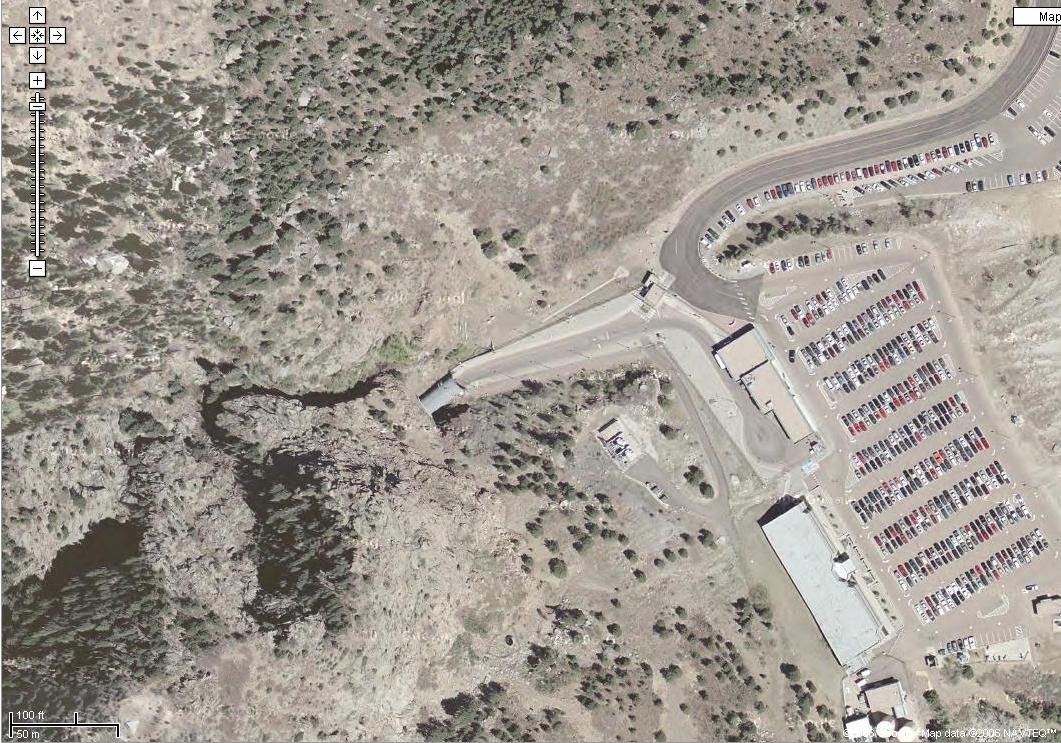
"The Google Earth study on the impacts and uses for defence and security is aimed at answering a number of questions. What are the technical features, the reliability and limits of GE data and software, regarding international security regulations? Which confidence in data, real dangers of a pernicious use, or impacts of such an easy access to imagery is there on users or the geographical information market? What are the new applications stemming from GE, which services can be derived from this application, or what are the ways to integrate GE into an information system?"
Stay tuned for the upcoming 0day sights from around the world.
Independent Security Consultancy, Threat Intelligence Analysis (OSINT/Cyber Counter Intelligence) and Competitive Intelligence research on demand. Insightful, unbiased, and client-tailored assessments, neatly communicated in the form of interactive reports - because anticipating the emerging threatscape is what shapes the big picture at the end of the day. Approach me at dancho.danchev@hush.com
Tuesday, May 16, 2006
Techno Imperialism and the Effect of Cyberterrorism
It's been a while since I've last blogged about Cyberterrorism, and while many did mentioned the topic in between the recent DRDoS attacks, Cyberterrorism is so much more than simply shutting down the Internet, namely the ability to communicate, research, recruit and use propaganda to achieve goals based on ideological beliefs, or the convergence of Terrorism and the Internet.
Can we argue that cyberterrorism is the direct effect of techno imperialism, or let's use a more friendly word such as IT-dependent society and information infrastructure?
What exactly does cyberterrorism mean? When does an average internet user's malicious activity turns into cyberterrorism ones? Are there clear definitions, or the lack of such as resulting in the in a total misunderstanding for both, the media and the general public. The recently released Google Trends, which I covered in a previous post, doesn't even count Cyberterrorism, so I looked further and came across to a very good research "Fear-mongering or fact: The construction of ‘cyber-terrorism’ in U.S., U.K, and Canadian news media" that aims to emphasize on the common misunderstanding when defining Cyberterrorism and the media's acceptance of the concept. The outcome? Declining media presence with the years, to end up where it is today, but what you should keep in mind is that the concept is still out there.
Trying to seperate Cyberterrorism as a tool for achieving Information Warfare dominance is like on purposely ignoring the the big picture -- that Cyberterrorism, one that sometimes results out of hacktivism tensions is a powerful tool for achieving the full effect of information warfare. Whereas such attacks occur all the time, I can argue that the actual impact of cyberterrorism cannot be easily and quantitatively justified. We all know that it's theoretically logical for terrorists to use the Internet for various cyberplanning and cyber communication, what can we do about it?
Crawling for terrorist web sites clearly associated with different organizations, or trying to spot terrorist symphatizers have been in the execution stage for yers. Projects such as the Terrorism Knowledge Discovery Project, take a very deep look into the subject by introducing Terrorism Knowledge Portal, an aggregated source for intelligence. Moreover, according to a recent article :
"SAIC has a $US7 million Defence Department contract to monitor 1500 militant websites that provide al Qaeda and other militant organisations with a main venue for communications, fund-raising, recruitment and training." It's also interesting to note other initiatives that started back in 2001, such as the Automatic Identification of Extremist Internet Web Sites.
Another concept goes in-depth into Confronting Cyberterrorism with Cyber Deception as "if it is possible to deceive terrorists, then it should also be possible to deceive cyberterrorists. The reliance of cyberterrorists on information technology makes them vulnerable to cyber deceptions. In addition, many of the methods and tools that cyberterrorists would use are similar to those used by other less malicious hackers, so we can plan specific deceptions to use against them in advance." As you can see on the grid above, the actors, the deception target and the level of difficulty provide more insight into the idea, great research!
Steganography embedded images used by terrorists on the public web can be doubtful, but on the Dark Web, why not? According to a research I came across to some time ago :
"In academia, graduate students Niel Provos and Richard Honeyman at the University of Michigan have written a web crawling program to detect steganographic images in the wild. The program has already digested 2 billion JPEG’s on popular sights such as ebay and has so far found only one stego-image in the wild. The detected image was on an ABC web page that dealt with the topic of steganography."
Detecting Steganographic Content on the Internet as a concept has been around for ages, while plain old encryption is the de-facto practice according to a well researched news article :
• Wadih El Hage, one of the suspects in the 1998 bombing of two U.S. embassies in East Africa, sent encrypted e-mails under various names, including "Norman" and "Abdus Sabbur," to "associates in al Qaida," according to the Oct. 25, 1998, U.S. indictment against him. Hage went on trial Monday in federal court in New York.
• Khalil Deek, an alleged terrorist arrested in Pakistan in 1999, used encrypted computer files to plot bombings in Jordan at the turn of the millennium, U.S. officials say. Authorities found Deek's computer at his Peshawar, Pakistan, home and flew it to the National Security Agency in Fort Meade, Md. Mathematicians, using supercomputers, decoded the files, enabling the FBI to foil the plot.
• Ramzi Yousef, the convicted mastermind of the World Trade Center bombing in 1993, used encrypted files to hide details of a plot to destroy 11 U.S. airliners. Philippines officials found the computer in Yousef's Manila apartment in 1995. U.S. officials broke the encryption and foiled the plot. Two of the files, FBI officials say, took more than a year to decrypt.
Among the many cases I am aware of worth mentioning are :
- What are the real risks of cyberterrorism? In 1998, a 12-year-old hacker broke into the computer system that controlled the floodgates of the Theodore Roosevelt Dam in Arizona, according to a June Washington Post report. If the gates had been opened, the article added, walls of water could have flooded the cities of Tempe and Mesa, whose populations total nearly 1 million.
- Cyberterrorism: How Real Is the Threat? Yonah Alexander, a terrorism researcher at the Potomac Institute—a think tank with close links to the Pentagon—announced in December 2001, the existence of an “Iraq Net.” This network supposedly consisted of more than one hundred websites set up across the world by Iraq since the mid-1990s to launch denial-of-service or DoS attacks against U.S. companies. The concept of botnets wasn't that popular at the time, so that's an example of marginal thinking on acquiring DoS power.
- In the indictment against Zacharias Moussaoui, it states that Moussaoui had among his possessions a flight simulator program, software for reviewing pilot procedures for a Boeing 747 Model 400, and a computer disk of information on aerial spraying of pesticides. The indictment also outlines Moussaoui’s use of e-mail to inquire about flight training.
- For almost two years, intelligence services around the world tried to uncover the identity of an Internet hacker who had become a key conduit for al-Qaeda. The savvy, English-speaking, presumably young webmaster taunted his pursuers, calling himself Irhabi -- Terrorist -- 007. He hacked into American university computers, propagandized for the Iraq insurgents led by Abu Musab al-Zarqawi and taught other online jihadists how to wield their computers for the cause.
I can argue which article is more intriguing compared to BusinesWeek's writeup on catching the ShadowCrew, but anyway all you need to a get a reader's attention is a name such as Abu Musab al-Zarqawi, a point that I feel is totally brainwashed in this paragraph :)
Cyberterrorism is an inseparable part of Information Warfare, and while we would hopefully never witness a catastrophic scenario, that is offensive use of Cyberterrorism, recruitment and propaganda flood the Internet on a daily basis. Just stop being suspicious about everyone, and try to enjoy life in between, can you, as terrorists are not everywhere -- but where we see them at the bottom line!
Can we argue that cyberterrorism is the direct effect of techno imperialism, or let's use a more friendly word such as IT-dependent society and information infrastructure?
What exactly does cyberterrorism mean? When does an average internet user's malicious activity turns into cyberterrorism ones? Are there clear definitions, or the lack of such as resulting in the in a total misunderstanding for both, the media and the general public. The recently released Google Trends, which I covered in a previous post, doesn't even count Cyberterrorism, so I looked further and came across to a very good research "Fear-mongering or fact: The construction of ‘cyber-terrorism’ in U.S., U.K, and Canadian news media" that aims to emphasize on the common misunderstanding when defining Cyberterrorism and the media's acceptance of the concept. The outcome? Declining media presence with the years, to end up where it is today, but what you should keep in mind is that the concept is still out there.
Trying to seperate Cyberterrorism as a tool for achieving Information Warfare dominance is like on purposely ignoring the the big picture -- that Cyberterrorism, one that sometimes results out of hacktivism tensions is a powerful tool for achieving the full effect of information warfare. Whereas such attacks occur all the time, I can argue that the actual impact of cyberterrorism cannot be easily and quantitatively justified. We all know that it's theoretically logical for terrorists to use the Internet for various cyberplanning and cyber communication, what can we do about it?
Crawling for terrorist web sites clearly associated with different organizations, or trying to spot terrorist symphatizers have been in the execution stage for yers. Projects such as the Terrorism Knowledge Discovery Project, take a very deep look into the subject by introducing Terrorism Knowledge Portal, an aggregated source for intelligence. Moreover, according to a recent article :
"SAIC has a $US7 million Defence Department contract to monitor 1500 militant websites that provide al Qaeda and other militant organisations with a main venue for communications, fund-raising, recruitment and training." It's also interesting to note other initiatives that started back in 2001, such as the Automatic Identification of Extremist Internet Web Sites.
Another concept goes in-depth into Confronting Cyberterrorism with Cyber Deception as "if it is possible to deceive terrorists, then it should also be possible to deceive cyberterrorists. The reliance of cyberterrorists on information technology makes them vulnerable to cyber deceptions. In addition, many of the methods and tools that cyberterrorists would use are similar to those used by other less malicious hackers, so we can plan specific deceptions to use against them in advance." As you can see on the grid above, the actors, the deception target and the level of difficulty provide more insight into the idea, great research!
Steganography embedded images used by terrorists on the public web can be doubtful, but on the Dark Web, why not? According to a research I came across to some time ago :
"In academia, graduate students Niel Provos and Richard Honeyman at the University of Michigan have written a web crawling program to detect steganographic images in the wild. The program has already digested 2 billion JPEG’s on popular sights such as ebay and has so far found only one stego-image in the wild. The detected image was on an ABC web page that dealt with the topic of steganography."
Detecting Steganographic Content on the Internet as a concept has been around for ages, while plain old encryption is the de-facto practice according to a well researched news article :
• Wadih El Hage, one of the suspects in the 1998 bombing of two U.S. embassies in East Africa, sent encrypted e-mails under various names, including "Norman" and "Abdus Sabbur," to "associates in al Qaida," according to the Oct. 25, 1998, U.S. indictment against him. Hage went on trial Monday in federal court in New York.
• Khalil Deek, an alleged terrorist arrested in Pakistan in 1999, used encrypted computer files to plot bombings in Jordan at the turn of the millennium, U.S. officials say. Authorities found Deek's computer at his Peshawar, Pakistan, home and flew it to the National Security Agency in Fort Meade, Md. Mathematicians, using supercomputers, decoded the files, enabling the FBI to foil the plot.
• Ramzi Yousef, the convicted mastermind of the World Trade Center bombing in 1993, used encrypted files to hide details of a plot to destroy 11 U.S. airliners. Philippines officials found the computer in Yousef's Manila apartment in 1995. U.S. officials broke the encryption and foiled the plot. Two of the files, FBI officials say, took more than a year to decrypt.
Among the many cases I am aware of worth mentioning are :
- What are the real risks of cyberterrorism? In 1998, a 12-year-old hacker broke into the computer system that controlled the floodgates of the Theodore Roosevelt Dam in Arizona, according to a June Washington Post report. If the gates had been opened, the article added, walls of water could have flooded the cities of Tempe and Mesa, whose populations total nearly 1 million.
- Cyberterrorism: How Real Is the Threat? Yonah Alexander, a terrorism researcher at the Potomac Institute—a think tank with close links to the Pentagon—announced in December 2001, the existence of an “Iraq Net.” This network supposedly consisted of more than one hundred websites set up across the world by Iraq since the mid-1990s to launch denial-of-service or DoS attacks against U.S. companies. The concept of botnets wasn't that popular at the time, so that's an example of marginal thinking on acquiring DoS power.
- In the indictment against Zacharias Moussaoui, it states that Moussaoui had among his possessions a flight simulator program, software for reviewing pilot procedures for a Boeing 747 Model 400, and a computer disk of information on aerial spraying of pesticides. The indictment also outlines Moussaoui’s use of e-mail to inquire about flight training.
- For almost two years, intelligence services around the world tried to uncover the identity of an Internet hacker who had become a key conduit for al-Qaeda. The savvy, English-speaking, presumably young webmaster taunted his pursuers, calling himself Irhabi -- Terrorist -- 007. He hacked into American university computers, propagandized for the Iraq insurgents led by Abu Musab al-Zarqawi and taught other online jihadists how to wield their computers for the cause.
I can argue which article is more intriguing compared to BusinesWeek's writeup on catching the ShadowCrew, but anyway all you need to a get a reader's attention is a name such as Abu Musab al-Zarqawi, a point that I feel is totally brainwashed in this paragraph :)
Cyberterrorism is an inseparable part of Information Warfare, and while we would hopefully never witness a catastrophic scenario, that is offensive use of Cyberterrorism, recruitment and propaganda flood the Internet on a daily basis. Just stop being suspicious about everyone, and try to enjoy life in between, can you, as terrorists are not everywhere -- but where we see them at the bottom line!
Independent Security Consultancy, Threat Intelligence Analysis (OSINT/Cyber Counter Intelligence) and Competitive Intelligence research on demand. Insightful, unbiased, and client-tailored assessments, neatly communicated in the form of interactive reports - because anticipating the emerging threatscape is what shapes the big picture at the end of the day. Approach me at dancho.danchev@hush.com
Insider Competition in the Defense Industry
While there aren't any smoking emails mentioned in this case, where else can we spot insiders if not in the defense industry, an industry where securing government-backed contracts, or teasing military decion makers with the latest technologies ensures the long-term existence of the business itself? From the article :
"Boeing has been under investigation for improperly acquiring thousands of pages of rival Lockheed Martin's proprietary documents in the late 1990s, using some of them to help win a competition for government rocket-launching business. The government stripped Boeing of about $1 billion worth of rocket launches for its improper use of the Lockheed documents."
Boeing and Lockheed Martin remain the key players in the defense industry, ensuring their portfolio of services (cyberwarfare, theater warfare, grid networking compatibility etc.) remain competitive. I once said that during the Cold War, the tensions between the U.S and the Soviet Union used to be the driving force of progress and innovation, these days, terrorism is the driving force and the "excuse" for military and intelligence spending. And while NASA's budget has been decreasing with the time, the next major space innovation wouldn't come from NASA, but from the commercial sector.
What's the bottom line? A minor short-term effect, and long-term business continuity for sure as "Boeing shares fell $1.76, or 2 percent, to $85.25 in morning trading on the New York Stock Excange."

"Boeing has been under investigation for improperly acquiring thousands of pages of rival Lockheed Martin's proprietary documents in the late 1990s, using some of them to help win a competition for government rocket-launching business. The government stripped Boeing of about $1 billion worth of rocket launches for its improper use of the Lockheed documents."
Boeing and Lockheed Martin remain the key players in the defense industry, ensuring their portfolio of services (cyberwarfare, theater warfare, grid networking compatibility etc.) remain competitive. I once said that during the Cold War, the tensions between the U.S and the Soviet Union used to be the driving force of progress and innovation, these days, terrorism is the driving force and the "excuse" for military and intelligence spending. And while NASA's budget has been decreasing with the time, the next major space innovation wouldn't come from NASA, but from the commercial sector.
What's the bottom line? A minor short-term effect, and long-term business continuity for sure as "Boeing shares fell $1.76, or 2 percent, to $85.25 in morning trading on the New York Stock Excange."
Independent Security Consultancy, Threat Intelligence Analysis (OSINT/Cyber Counter Intelligence) and Competitive Intelligence research on demand. Insightful, unbiased, and client-tailored assessments, neatly communicated in the form of interactive reports - because anticipating the emerging threatscape is what shapes the big picture at the end of the day. Approach me at dancho.danchev@hush.com
Subscribe to:
Comments (Atom)