Wednesday, November 19, 2008

The DDoS Attack Against Bobbear.co.uk

When you get the "privilege" of getting DDoS-ed by a high profile DDoS for hire service used primarily by cybercriminals attacking other cybercriminals, you're officially doing hell of a good job exposing money laundering scams.

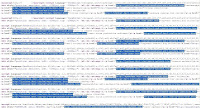
The attached screenshot demonstrates how even the relatively more sophisticated counter surveillance approaches taken by a high profile DDoS for hire service can be, and were in fact bypassed, ending up in a real-time peek at how they've dedicated 4 out of their 10 BlackEnergy botnets to Bobbear exclusively.

Perhaps for the first time ever, I come across a related DoS service offered by the very same vendor - insider sabotage on demand given they have their own people in a particular company/ISP in question. Makes you think twice before considering a minor network glitch what could easily turn into a coordinated insider attack requested by a third-party. Moreover, now that I've also established the connection between this DDoS for hire service and one of the command and control locations (all active and online) of one of the botnets used in the Russia vs Georgia cyberattack, the concept of engineering cyber warfare tensions once again proves to be a fully realistic one.

Related posts:
A U.S military botnet in the works
DDoS Attack Graphs from Russia vs Georgia's Cyberattacks
Botnet on Demand Service
OSINT Through Botnets
Corporate Espionage Through Botnets
The DDoS Attack Against CNN.com
A New DDoS Malware Kit in the Wild
Electronic Jihad v3.0 - What Cyber Jihad Isn't

New Web Malware Exploitation Kit in the Wild

Oops, they keep doing it, again and again - trying to cash-in on the biased exclusiveness of web malware exploitation kits in general, which when combined with active branding is supposed to make them rich. However, despite the low price of $300 in this particular case, this copycat kit is once again lacking any signification differentiation factors besides perhaps the 20+ exploits targeting Opera and Internet Explorer included within.

Marketed for novice users, despite lacking any key features worth being worried about, it's still managing to maintain a steady infection rate of unpatched Opera browsers. Such statistics obtained in an OSINT fashion always provide a realistic perspective on publicly known facts, like the one where millions of end users continue getting exploited due to their overall misunderstanding of today's threatscape driven by the ubiquitous web exploitation kits. 

Related posts:
Modified Zeus Crimeware Kit Gets a Performance Boost 
Zeus Crimeware Kit Gets a Carding Layout
Web Based Malware Emphasizes on Anti-Debugging Features
Copycat Web Malware Exploitation Kit Comes with Disclaimer
Web Based Malware Eradicates Rootkits and Competing Malware
Two Copycat Web Malware Exploitation Kits in the Wild
Copycat Web Malware Exploitation Kits are Faddish
Web Based Botnet Command and Control Kit 2.0
BlackEnergy DDoS Bot Web Based
A New DDoS Malware Kit in the Wild
The Small Pack Web Malware Exploitation Kit
The Nuclear Grabber Kit
The Apophis Kit
Nuclear Malware Kit
The Random JS Malware Exploitation Kit
Metaphisher Malware Kit Spotted in the Wild

Tuesday, November 18, 2008

Will Code Malware for Financial Incentives

A couple of hundred dollars can indeed get you state of the art undetectable piece of malware with post-purchase service in the form of automatic lower detection rate for sure, but what happens when the vendors of such releases start vertically integrating just like everyone else, and start offering OS-independent spamming, flooding, modifications and tweaking of popular crimeware kits in the very same fashion? The quality assurance process gets centralized into the hands of experienced programmers that have been developing cybercrime facilitating tools for years.

It's interesting to monitor the pricing schemes that they implement. For instance, the modularity of a particular malware, that is the additional functions that a buyer may want or not want, increase or decrease the price respectively. Others, tend to leave the price open topic by only mentioning the starting price for their services and they increasing it again in open topic fashion.

Let's take look at some recently advertised (translated) "malware coding for hire" propositions, highlighting some of the latest developments in their pricing strategies :

Proposition 1 :
"Programs and scripts under the following categories are accepted :
grabbers; spamming tools for forums, spamming tools for social networking sites, modifications of admin panels for (popular crimeware kits), phishing pages

Platform: software running on MAC OS to Windows
Multitasking: have the capacity to work on multiple projects
Speed and responsibility: at the highest level
Pre-payment for new customers: 50% of the whole price, 30% pre-pay of the whole price for repreated customers
Support: Paid
Rates: starting from 100 euros

If, after speaking ultimate price, you decide to add to your order something else - the price change. Prepare the job immediately, which will understand what to do and how much it will cost you, if you have any suggestions for a price, then lays them immediately and not after the work is completed. If you order something that requires parsing your logs, and their continued use, you agree to provide "a significant portion of the logs, so that after putting the project did not raise misunderstandings due to the fact that some logs are no longer "fresh", because of their "uniqueness". In this case, for the finalization of the project will be charged an additional fee."

This is an example of an "open topic pricing scheme" with the vendor offering the possibility to code the malware or the tool for any price above 100 euro based on what he perceives as features included within worth the price.

Proposition 2:
"Starting price for my malware is 250 EUR. Additional modules like P2P features, source code for a particular module go for an additional 50 EUR. If you're paying in another currency the price is 200 GBP or 395 dollars. I sell only ten copies of the builder so hurry up. The trading process is simple - a password protected file with the malware is sent to you so you can see the files inside. You then sent the money and I mail you back the password. If you don't like this way you lose. 

I can also offer you another deal, I will share the complete source code in exchange to access to a botnet with at least 4000 infected hosts because I don't have time to play around with me bot right now.

This proposition is particularly interesting because the seller is introducing basic understanding of exchange rates, but most of all because he's in fact offering a direct bargain in the form of access to a botnet in exchange for a complete source code of his malware bot. Both propositions are also great examples that vendors engage by keeping their current and potential customers up-to-date with TODO lists of features to come next to the usual CHANGELOGS, and, of course,  establish trust by allowing potential customers to take a peek at the source code of the malware they're about to purchase.

Related posts:
Coding Spyware and Malware for Hire
The Underground Economy's Supply of Goods and Services
The Dynamics of the Malware Industry - Proprietary Malware Tools
Using Market Forces to Disrupt Botnets
Multiple Firewalls Bypassing Verification on Demand
Managed Spamming Appliances - The Future of Spam
Localizing Cybercrime - Cultural Diversity on Demand
E-crime and Socioeconomic Factors
Russia's FSB vs Cybercrime
Malware as a Web Service
Localizing Open Source Malware
Quality and Assurance in Malware Attacks
Benchmarking and Optimising Malware

Thursday, November 13, 2008

Embassy of Brazil in India Compromised

Only an amateur or unethical competition would embedd malicious links at the Embassy of Brazil in India's site, referencing their online community. With the chances of an Embassy involvement into the fake antivirus software industry close to zero, let's assess the attack that took place.

The compromise is a great example of a mixed use of pure malicious domains in a combination with compromised legitimate ones and on purposely registered accounts at free web space providers, hosting the blackhat SEO content. However, digging deeper we expose the entire malicious doorways ecosystem pushing PDF exploits, banker malware and Zlob variants. The malicious attackers embedded links to their blackhat SEO farms advertising fake security software, and also a link to a traffic redirection doorway

epmwckme.dex1.com
htkobaf.dex1.com
ogbucof.dex1.com
segundomuelle.com/mex/antivirus
jgzleaa.dex1.com
igpran.ru/services/tolstye

The active and redirecting traff .asia (89.149.251.203) is currently serving a fake account suspended notice - "This account has been suspended. Either the domain has been overused, or the reseller ran out of resources." but is whatsoever redirecting us to antimalware09 .net. This particular traffic redirection doorway is actively redirecting us to a command and control server running a well known web malware exploitation kit which is currently serving PDF exploits.  

google-analyze .com/socket/index.php (216.195.59.77) from where we're redirected to google-analyze.com/tracker/load.php which is serving system.exe (Trojan-Spy.Win32.Zbot.ehk; Win32.TrojanSpy.Zbot.gen!C.5), and google-analyze .com/tracker/pdf.php (Exploit:Win32/Pdfjsc.G; Exploit.JS.Pdfka.w; Bloodhound.Exploit.196). Naturally, within the live exploit URLs there are multiple IFRAMEs redirecting us to more of this group's campaigns. google-analyze .com  has multiple IFRAMEs pointing to google-analystic .net (209.160.67.56), yet another traffic redirection doorway further exposing their campaigns.

For instance, google-analystic .net/in.cgi?20 loads google-analystic.net/tea.php (209.160.67.56) where google-analystic .net/in.cgi?8 is redirecting to 91.203.93.61 /in.cgi?2 taking us to 91.203.93.61 /25/2/ where we deobfuscate the javascript leading us to the exact location of the PDF exploit - 91.203.93.61 /25/2/getfile.php?f=pdf. This is just for starters. google-analystic .net/in.cgi?9 redirects to mangust32 .cn/pod/index.php (218.93.202.102) where they serve load.exe (Backdoor:Win32/Koceg.gen!A) at
mangust32 .cn/pod2/load.php and load.exe at mangust32 .cn/eto2/load.php, moreover, google-analystic .net/in.cgi?10 leads us to mmcounter .com/in.cgi?id194 (94.102.50.130) a traffic management login which is no longer responding. The last IFRAME found within google-analystic points to busyhere .ru/in.cgi?pipka (91.203.93.16) which redirects to beshragos .com/work/index.php (79.135.187.38) where once we deobfuscate the script, we get to see the PDF exploit location beshragos.com /work/getfile.php?f=pdf.

What's contributing to the increase of PDF exploits durin the last month? It's an updated version of a web based malware exploitation tool, which despite the fact that it remains proprietary for the time being, will leak in the next couple of weeks causing the usual short-lived epidemic.

Related posts:
The Dutch Embassy in Moscow Serving Malware
U.S Consulate in St. Petersburg Serving Malware
Syrian Embassy in London Serving Malware
French Embassy in Libya Serving Malware

Dissecting the Latest Koobface Facebook Campaign

The latest Koobface malware campaign at Facebook, is once again exposing a diverse ecosystem worth assessing in times of active migration to alternative ISPs tolerating or conveniently ignoring the malicious activities courtesy of their customers. The -- now removed -- binaries that the dropper was requesting were hosted at the American International Baseball Club in Vienna, indicating a compromise.

us.geocities .com/adanbates84/index.htm
lostart .info/js/js.js (79.132.211.51)
off34 .com/go/fb.php (79.132.211.51)
youtube-spyvideo .com/youtube_file.html (58.241.255.37)
ahdirz .com/movie1.php?id=638&n=teen (208.85.181.69)
top100clipz .com/m6/movie1.php?id=638&n=teen (208.85.181.67)
hq-vidz .com/movie1.php?id=638&n=teen (208.85.181.68)

The dropper then phones back home to : f071108 .com/fb/first.php (79.132.211.50) with the binaries hosted at a legitimate site that's been compromised :

aibcvienna.org/youtube/ bnsetup24.exe
aibcvienna.org/youtube/ tinyproxy.exe

Related fake Youtube domains participating :
catshof .com (79.132.211.51)
youtube-spy .info (94.102.60.119)
youtubehof .net (218.93.205.30)
youtube-spyvideo .com (58.241.255.37)
yyyaaaahhhhoooo.ocom .pl (67.15.104.83)
youtube-x-files .com (94.102.60.119)

The development of cybercrime platforms utilizing legitimate infrastructure only, has always been in the works. With spamming systems relying exclusively on the automatically registered email accounts at free web based providers, to the automatic bulk registration of hundreds of thousands of domains enjoying a particular domain registrar's weak anti-abuse policies, it would be interesting to monitor whether marginal thinking or improved OPSEC relying on compromised hosts will be favored in 2009.

Related posts:
Fake YouTube Site Serving Flash Exploits
Facebook Malware Campaigns Rotating Tactics
Phishing Campaign Spreading Across Facebook
Large Scale MySpace Phishing Attack
Update on the MySpace Phishing Campaign
MySpace Phishers Now Targeting Facebook
MySpace Hosting MySpace Phishing Profiles

Wednesday, November 12, 2008

A Diverse Portfolio of Fake Security Software - Part Thirteen

What is the difference between a reactive and proactive threat intell? A reactive threat intell is assessing a campaign, individual, a group of individuals, how are they related to one another, and what have they been doing in the past, based exclusively on a lead that's been found within the past couple of hours.

Try the very latest rogue security domains courtesy of three domainers (Fedor Ibragimov cndomainz@yahoo.com, Anton Golovayk gpdomains@yahoo.com and Ivan Durov idomains.admin@gmail.com ) whose portfolios can always keep you updated about the latest releases of such popular software as The Best Antivirus Cleaner 2008.

powerfullantivirusscan .com (78.159.118.217; 89.149.253.215; 208.72.168.185)
protection-update .com
updatepcprotection .com
updateyourprotection .com
mac-imunizator .net (67.205.75.10)
avproinstall .com (78.157.141.26)
winavpro .com (92.241.163.30)


As far as proactive threat intell is concerned, try the following "upcoming fake security software domains" :

spywaredefender2009 .com
spywaredestroyer2009 .com
spywareeliminator2009 .com
spywareprotector2009 .com


It would be interesting to monitor whether or not the well known non-existent security software brands we've monitoring throughout 2008, will be basically typosquatted in a 2009 like fashion, or would they simply introduce new brands. With their business model under pressure, I'm starting to see evidence of schemes involving the illegal advertisement of affiliate links to legitimate security software, where the cybercriminals are actual resellers of it. There's also no shortage of surreal situations, where a fake security software is taking advantage of blackhat SEO practices promising the removal of competing fake security software brands.

Last week, the noadware .net (69.20.71.82; 69.20.104.139) software was persistently advertised in such a way, mostly by generating Wordpress accounts promising to remove competing software :

antiviruspro2009.wordpress .com
ultraantivirus2009.wordpress .com
smartantivirus.wordpress .com
antiviruslab2009.wordpress .com
antivirusvip.wordpress .com
personaldefender2009.wordpress .com
malwareremoval.wordpress .com


Naturally, it didn't take long before blackhat SEO farms were created for the purpose, like these very latest ones :

removal-tool.blogspot .com
cgidoctor .com
spywareremoval .net
spyware-adware-remover .com
spywarestop .com
zero-adware .net
adware-remove .com
antispywaresecrets .com
protectyourcomputerfromspyware .info
cleanpcfree .net
spyware-bot  .com
spywarezapper.co .uk
thepcsecurity .com
noadware-official-site .com
spywaredoctorfavor .cn
removespywareedge .cn
thespywareremover .com
virusremovalguru .com
virusremovalguide .org


The day when fake security software sites start attracting traffic by promising to remove other fake security software, is the day when we have clear evidence that an ecosystem has emerged.

Related posts:
A Diverse Portfolio of Fake Security Software - Part Twelve
A Diverse Portfolio of Fake Security Software - Part Eleven
A Diverse Portfolio of Fake Security Software - Part Ten
A Diverse Portfolio of Fake Security Software - Part Nine
A Diverse Portfolio of Fake Security Software - Part Eight
A Diverse Portfolio of Fake Security Software - Part Seven
A Diverse Portfolio of Fake Security Software - Part Six
A Diverse Portfolio of Fake Security Software - Part Five
A Diverse Portfolio of Fake Security Software - Part Four
A Diverse Portfolio of Fake Security Software - Part Three
A Diverse Portfolio of Fake Security Software - Part Two
Diverse Portfolio of Fake Security Software